Genus: Pseudotsuga
Family: Pinaceae
Today I’m going to explore the story of coast Douglas-fir, Pseudotsuga menzesii. To be honest, I’ve been a little hesitant, intimidated even, to write about the most important tree in Oregon and possibly the world. It’s a complex story that caused me to reflect on how we got here and where we’re going.
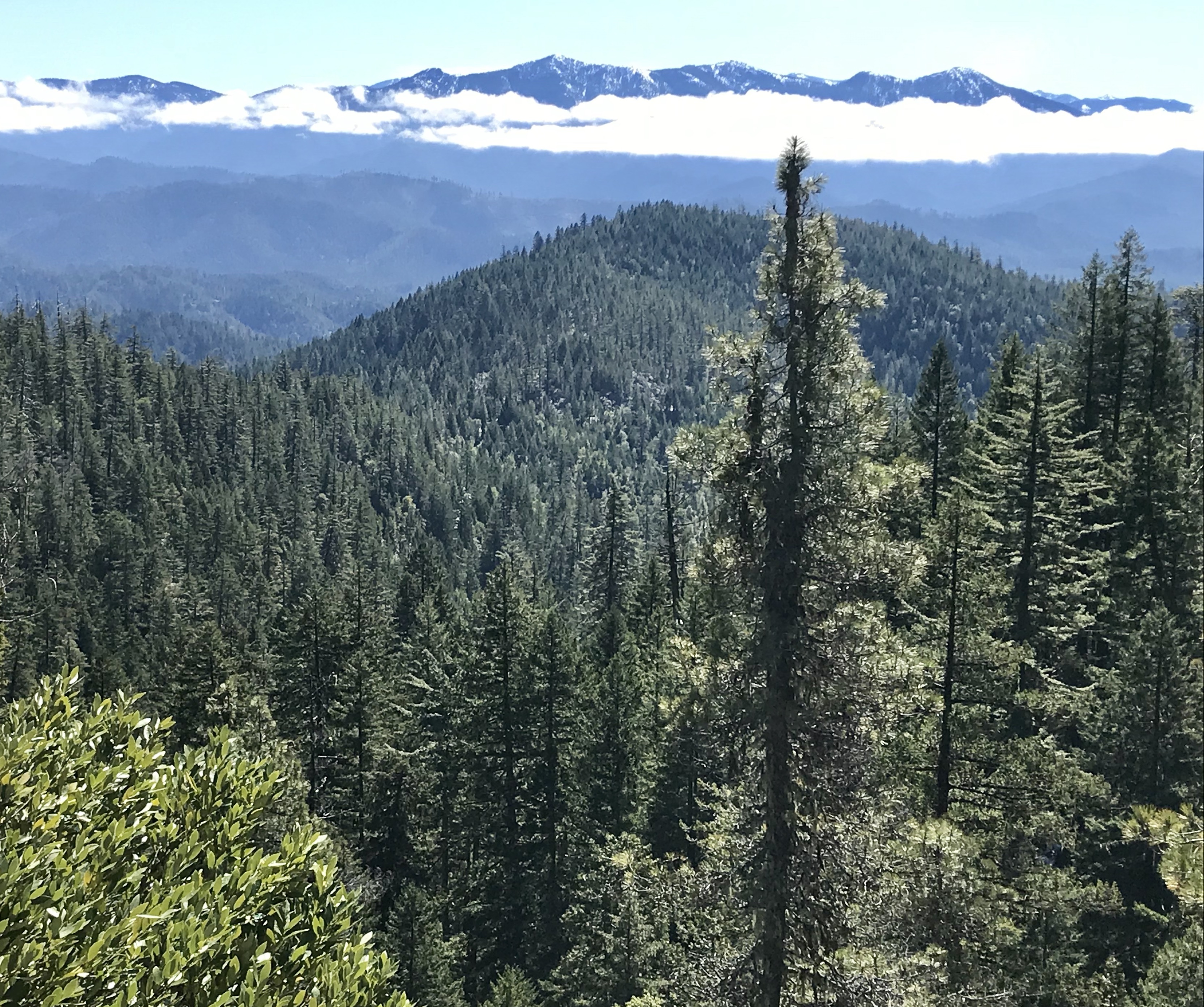
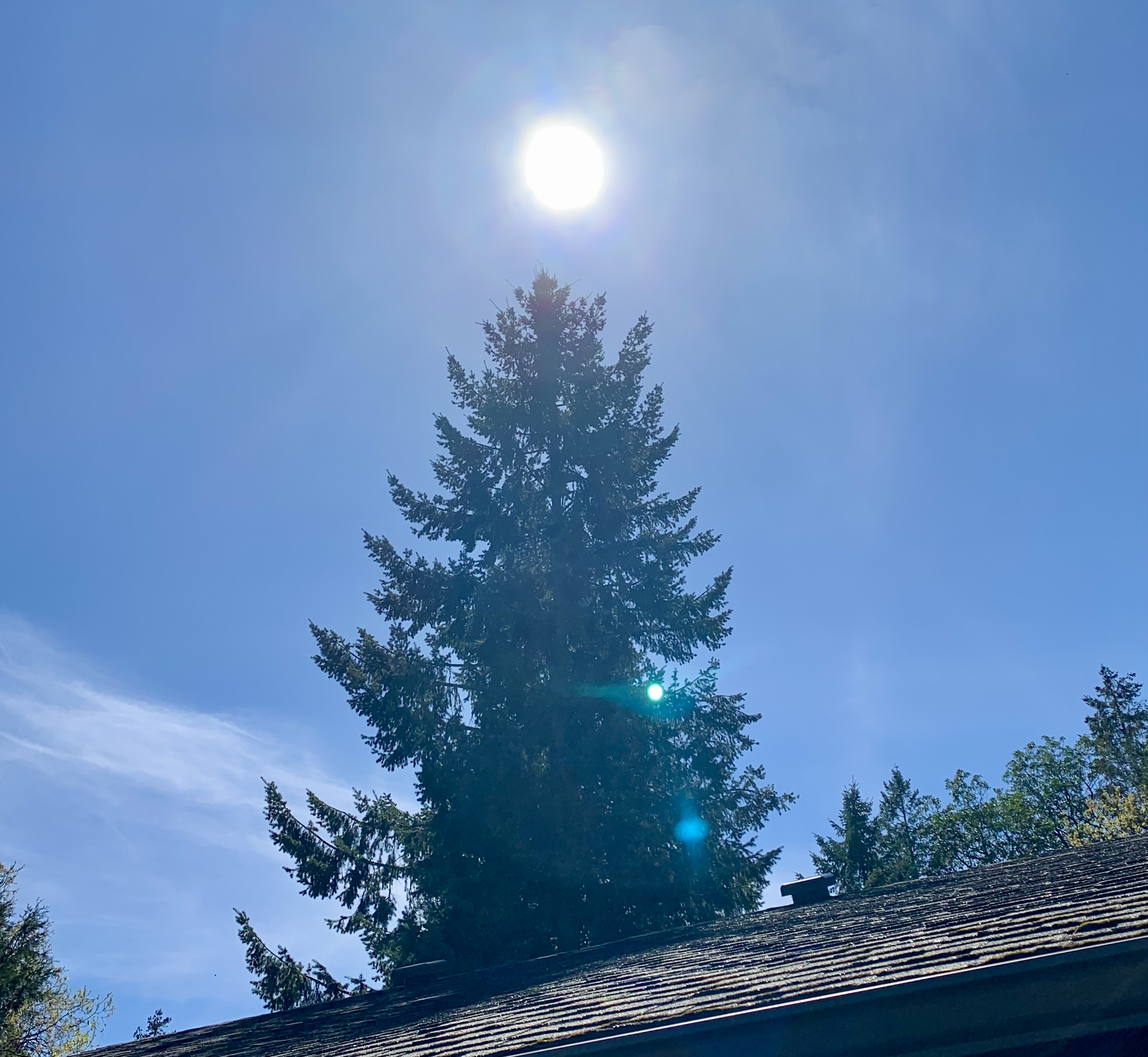
Since moving to Southern Oregon I’ve come to realize how deeply rooted Douglas-firs are to the people here, its economy, politics and the environment. I’ve developed a relationship with a 50 year-old Doug-fir that grows in our yard. It’s young in comparison, since Doug-firs can live to be 500-1000 years old and reach heights of 400 ft. It’s the tallest tree in our yard and I see it as the protector of our land. During fire season I often ask it if we will all be okay? The answer has always been “yes” …as long as we take care of the trees….
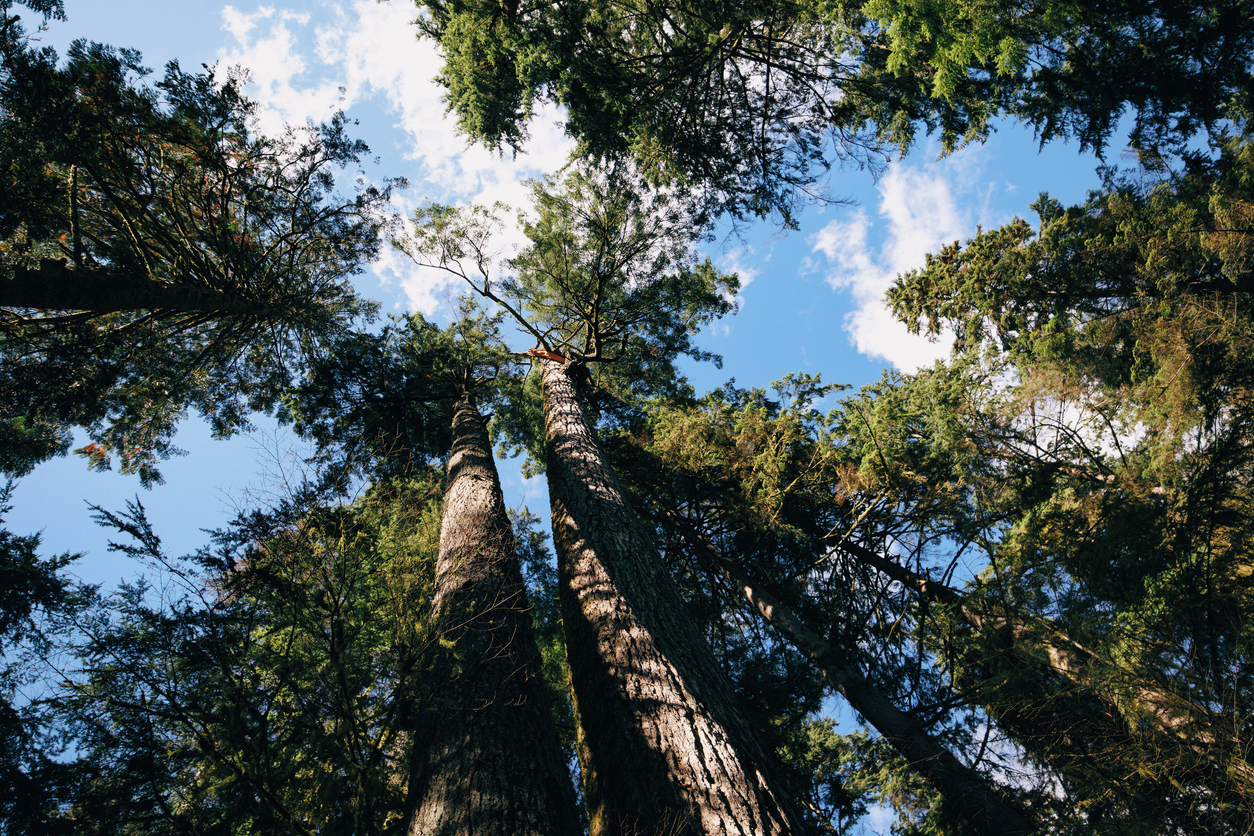
Douglas-firs dominate the forests here in Josephine County, OR. In fact, eight out of ten conifers in southwest Oregon are Douglas-firs. They drive Oregon’s $18 billion timber industry, and make up 3/4 of the total tree harvest in the USA. Known as the tree that “built Oregon” they became Oregon’s state tree 1939. Even our 1970’s home is built with old-growth Douglas-fir.
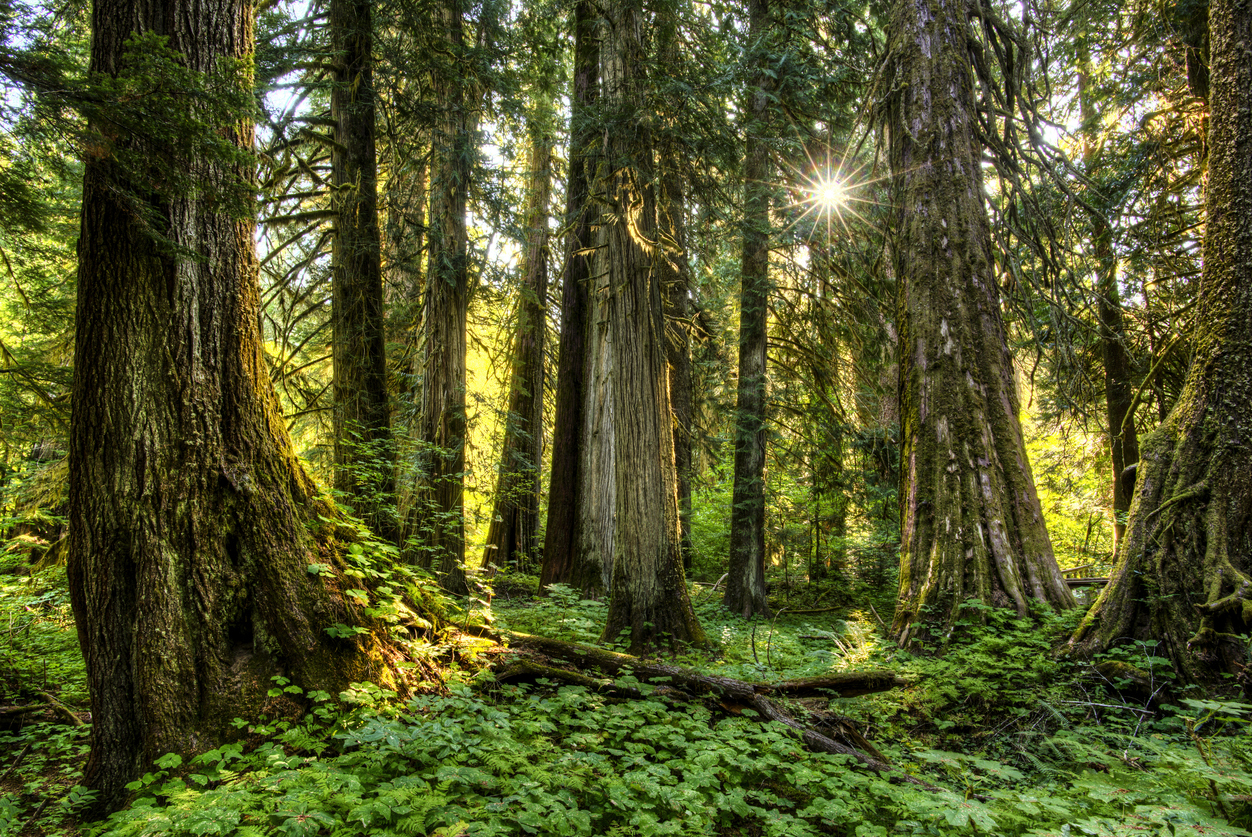
The Pacific Northwest has long been home to old-growth forests of Douglas-fir, Western hemlock (Tsuga heterophylla, Sitka spruce (Picea sitchensis) and Western redcedar (Thuja plicata). The oldest known fossil of Douglas-fir was found right here in Oregon. Fossil records indicate that they originated here over 50 million years ago, before migrating across the Bering land bridge to Eastern Asia 26 million years later.
Coast Douglas-firs, Pseudotsuga menzesii, are also one of the tallest recorded trees in the world. Its closest rivals are coast Redwood (Sequoia sempervirens) and Sitka spruce (Picea sitchensis).
How Douglas-fir got its name….
The common name “Douglas-fir” honors David Douglas, a Scottish botanist who collected plants specimens along the Columbia River in 1825.
In 1867, Elie-Abel Carriere, a French horticulturist realized that Douglas-fir needed to be placed in its own genus. He named this new genus Pseudotsuga, meaning “false hemlock” based on the Latin word pseudo “false” and the Japanese word Tsuga for “hemlock.” In 1953 Joao Manuel Franco, a Portuguese botanist, proposed that the coastal species be named Pseudotsuga menzesii, after Archibald Menzies, another Scottish botanist who collected earlier specimens in 1792. Since it’s not a “true fir,” the name Douglas-fir is always hyphenated.
There are five primary species of Douglas-fir native to western North America and Southeast Asia.
- Pseudotsuga menzesii – Coastal Douglas-fir
- Pseudotsuga glauca – Rocky Mountain-fir
- Pseudotsuga macrocarpa – Bigcone Douglas-fir
- Pseudotsuga japonica – Japanese Douglas-fir (endangered)
- Pseudotsuga sinessis – Chinese Douglas-fir (vulnerable)
Since Douglas-firs are neither firs nor hemlocks, it can be confusing to understand the difference..
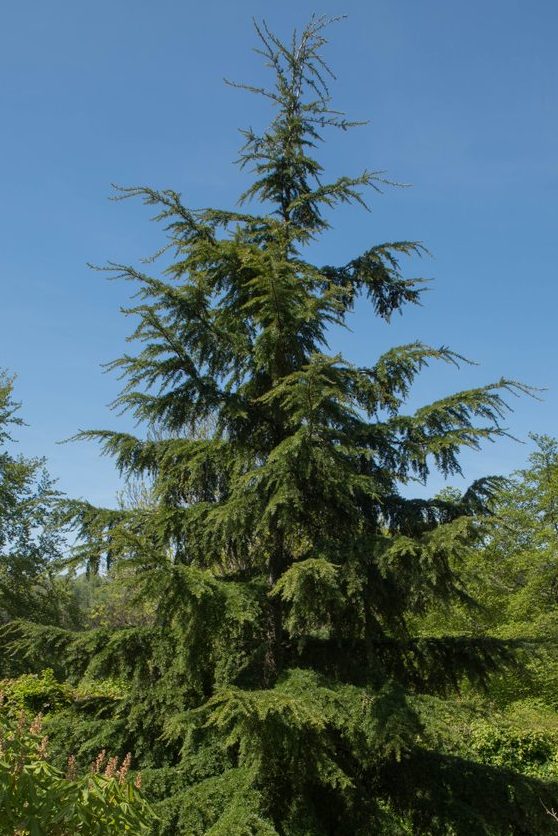
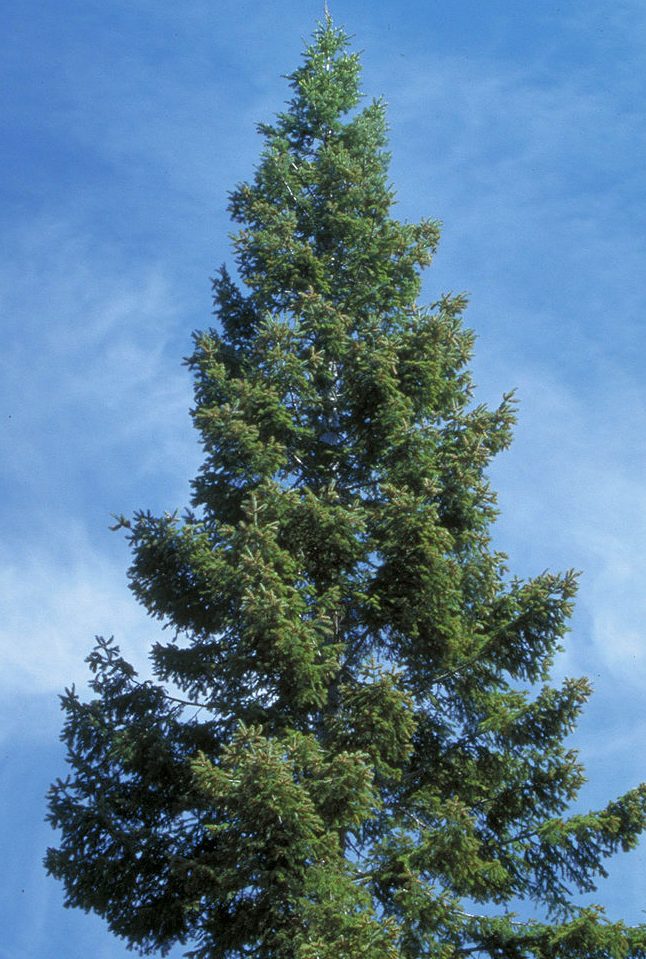
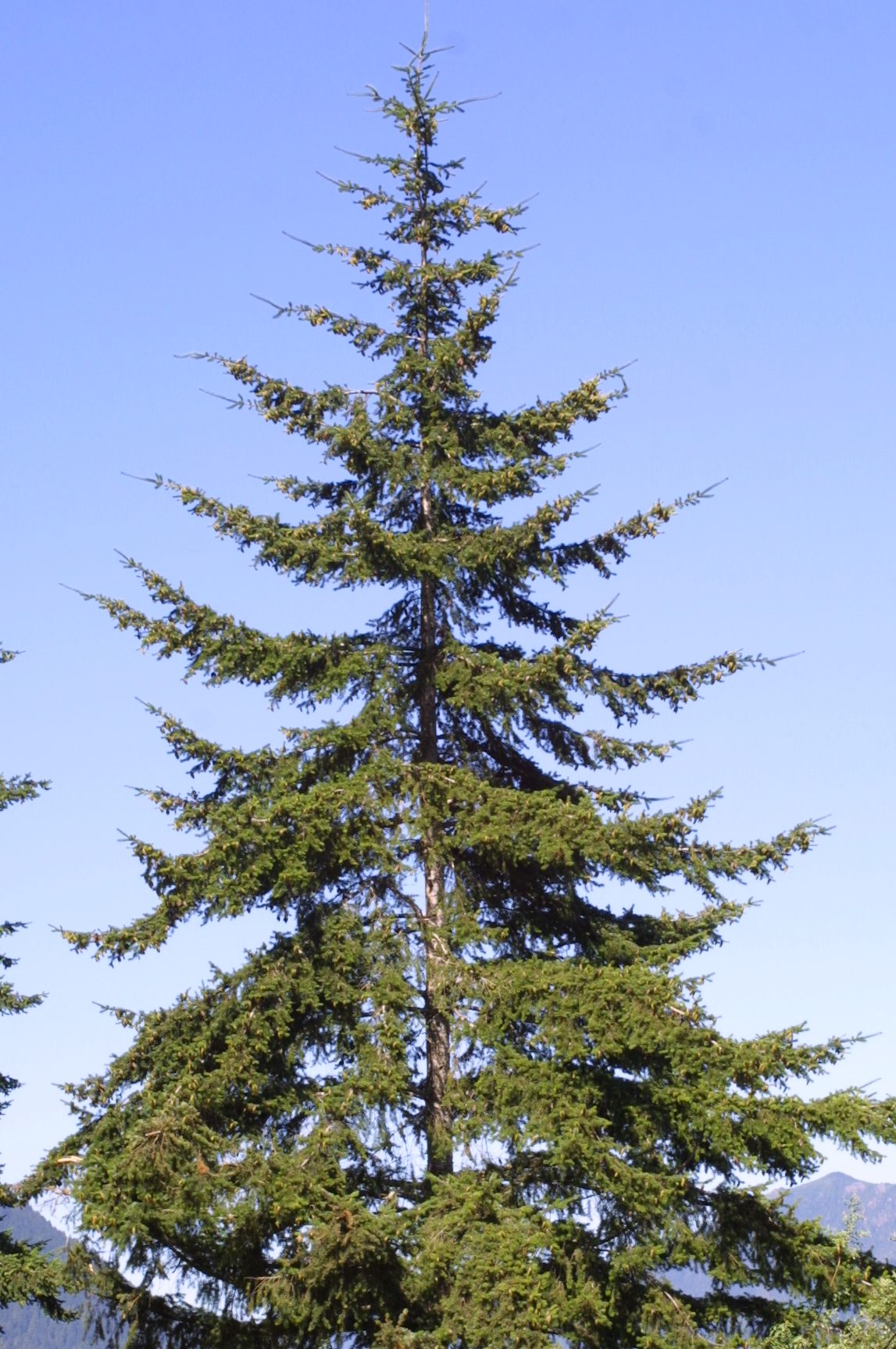
2. Grand fir (Abies grandis)
3. Douglas-fir (Pseudotsuga menziesii)
The easiest way to differentiate a Douglas-fir from a hemlock or fir is by looking at their needles and cones.
- Western hemlock (Tsuga heterophylla)
- Cones – <1″ small egg-shaped & papery that dangle from the branches.
- Needles – Unequal short flat needles creates a feather-like appearance.
- Bark – Thin and scaly with furrowed reddish-brown ridges on older trees.
- Branches – Overall drooping appearance.
- Grand fir (Abies grandis)
- Cones – 2″-4″ erect cones on branches, fall apart while still on the tree.
- Needles – Shiny, flat needles with two white stripes underneath in two flat rows.
- Bark – Smooth grey-brown on young trees, get furrowed with age.
- Branches – Stiff, upright appearance.
- Douglas-fir (Pseudotsuga menziesii)
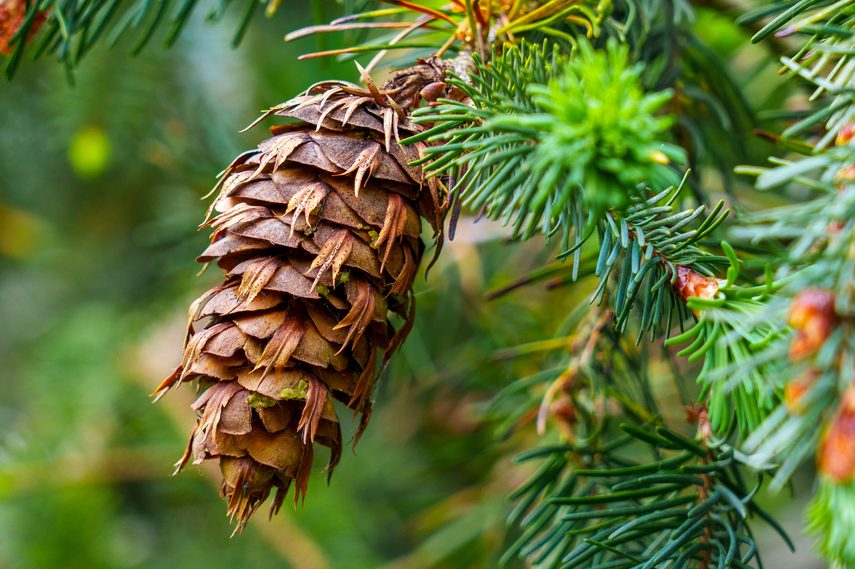
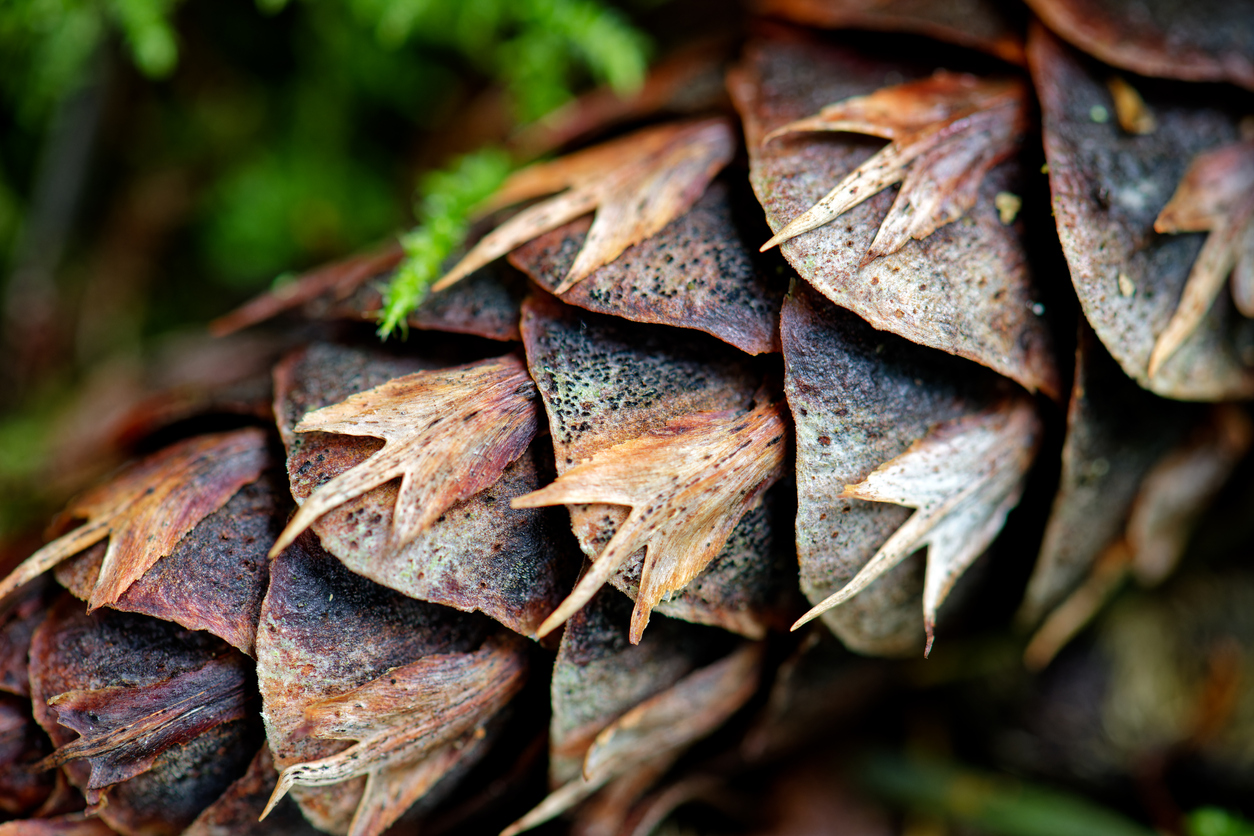
- Cones – 3″-4″ hanging down with three-pronged bracts sticking out from the scales.
- Needles – Soft, flat equally long, rotating around twigs like a bottle-brush.
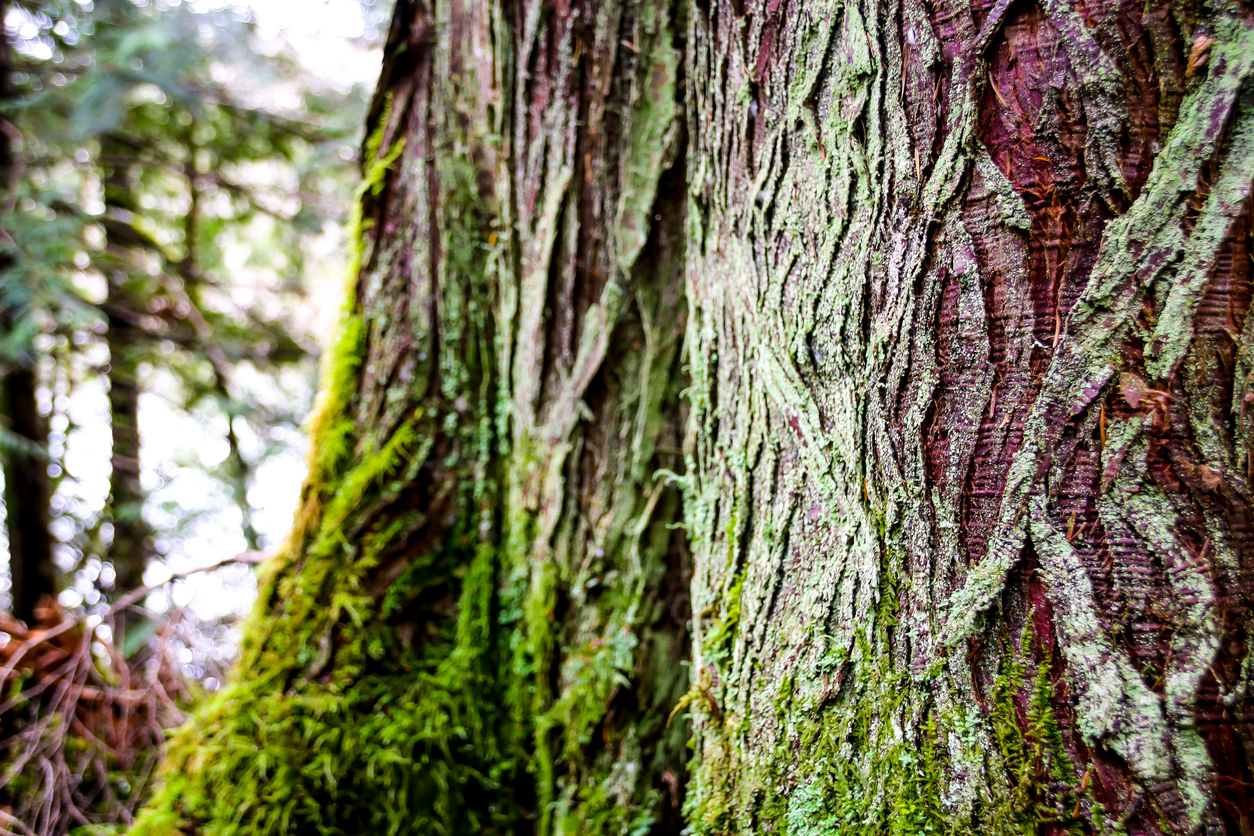
- Bark – Thick and deeply furrowed, corky-brown color.
- Branches – Lower limbs droop, upper limbs swoop up.
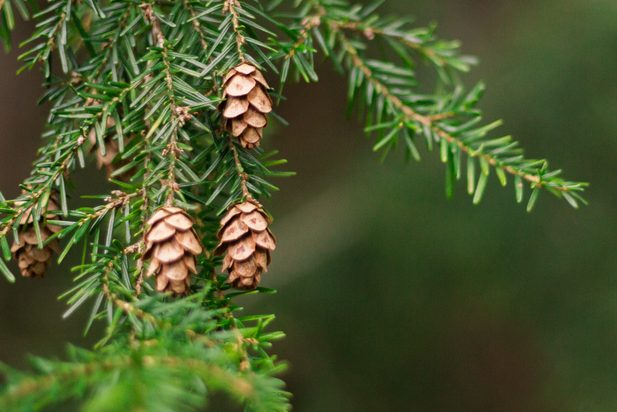
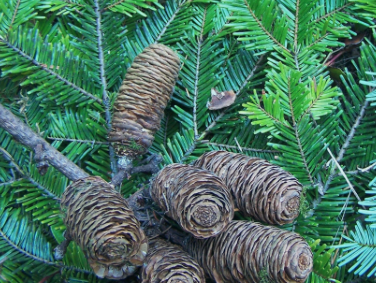
2. Grand fir (Abies grandis)
3. Douglas-fir (Pseudotsuga menziesii)
The first people…
Long before these trees were known as Douglas-firs, they grew in old-growth forests that were cared for by the indigenous people who lived among them. In Southwest Oregon these First Nation people included the Coquille, Shasta, Tututni, Tolowa, Latgawa, Takelma, Applegate and Galice. Other Pacific Northwest tribes include the: Salish, Skagit, Suquamish, Cowlitz, Quinault, Clatsop, Chinook, Alsea, Yaquina, Coos, Siuslaw, Chetco, Molalla, Tillamook, Cow Creek, Clackamas, Chasta, Umpqua, Yurok, Klamath, Modoc to name a few.
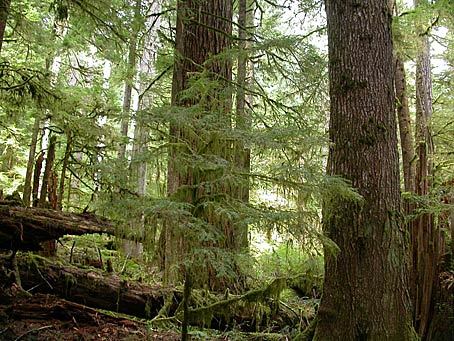
They honored elder Douglas-firs as the protectors of the forest, mainly due to their immense size and resistance to fire. Doug-firs provided wood for fire, shelter and tools, boughs for insulation and bedding. Its needles, bark and resin were used for medicine and salve, its pitch was applied like caulk, glue or sealant.

Most importantly these First Nation people knew how to manage these old-growth forests by using low-intensity fire to clear overgrown underbrush and reduce the chance of large destructive wildfires. These “intentional” fires also encouraged the growth of desirable plants and trees such as camas, huckleberry and oak. They also saw that elder Douglas-firs could withstand fire due to its thick furrowed bark.
A Native American legend tells of a mouse that sought protection from a forest fire within the cones of an elder Douglas-fir, which is why the mouse’s back legs and tail can be seen sticking out from beneath the cone’s scales. These unique three-pronged bracts are the easiest way to differentiate Douglas-firs from other conifers.
Europeans arrive by boat…
The first European to record these impressive giants was Archibald Menzies, a Scottish surgeon and botanist, who collected seedlings from Vancouver Island, British Columbia in 1792. He identified these trees as pines or firs.
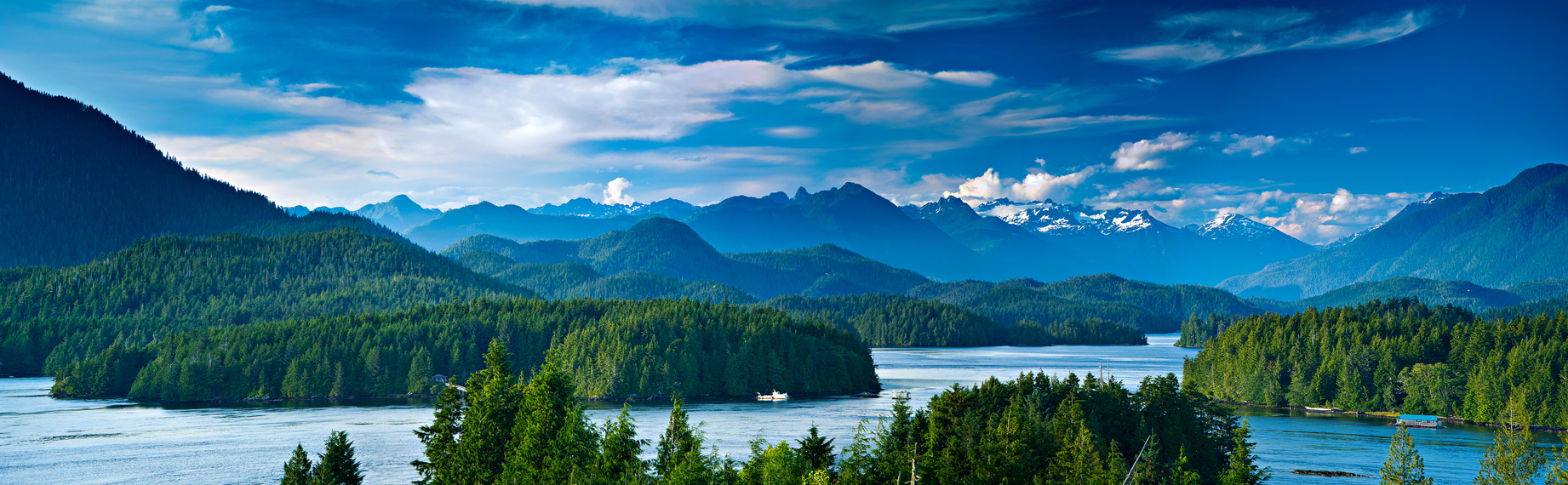
Menzies was a crew member on the HMS Discovery, commanded by Captain George Vancouver (1757-1798) and commissioned by the British Royal Navy to sail around the world. Vancouver had previously sailed with Captain James Cook to Hawaii. This marked the beginning of trade between China, Hawaii and the Pacific Northwest.
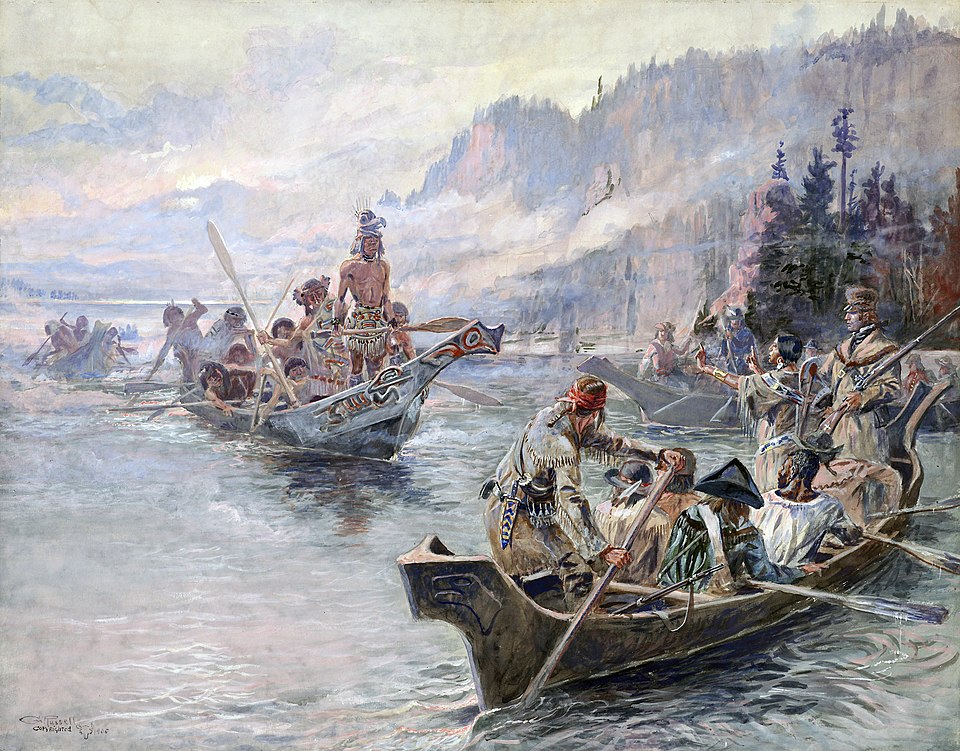
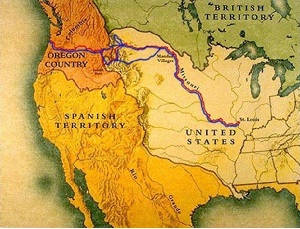
In 1804 President Thomas Jefferson commissioned the Lewis & Clark Expedition to explore the newly purchased Louisiana Territory and find a direct inland water route through Oregon Country to the Pacific Ocean. They arrived at the Pacific Ocean via the Columbia River in November 1805. They built an encampment named Fort Clatsop near present day Astoria, Oregon. Along the way they recorded several new varieties of trees they named: “Fir No. 2″(Rocky Mountain Fir – Pseudotsuga glauca) and “Fir No. 5” (Coast Fir – Pseudotsuga menziesii).
In 1811 John Jacob Astor (1763-1848), a German-American merchant, opened the Pacific Fur Company located at the mouth of the Columbia River. It was the first fur-trading post west of the Rocky Mountains. Astor along with the help of the Chinook and Clatsop people plus twelve Hawaiians built Fort Astoria, the first U.S. settlement on the Pacific Coast. After the War of 1812, the British renamed it Fort George. It was converted back to Fort Astoria when the Hudson’s Bay Company took it over in 1825.

In 1825 David Douglas (1799-1834) a Scottish botanist, arrived at the Hudson’s Bay Company (HBC) near Fort Astoria. He was greeted by Dr. John McLoughlin (1784-1857) a Canadian businessman and director of HBC’s Columbia district. Together they boarded a canoe paddled by six members of the Chinook tribe for a 100 mile journey up the Columbia River to Fort Vancouver on the north shore. (present day Vancouver, WA, across the river from Portland, OR).
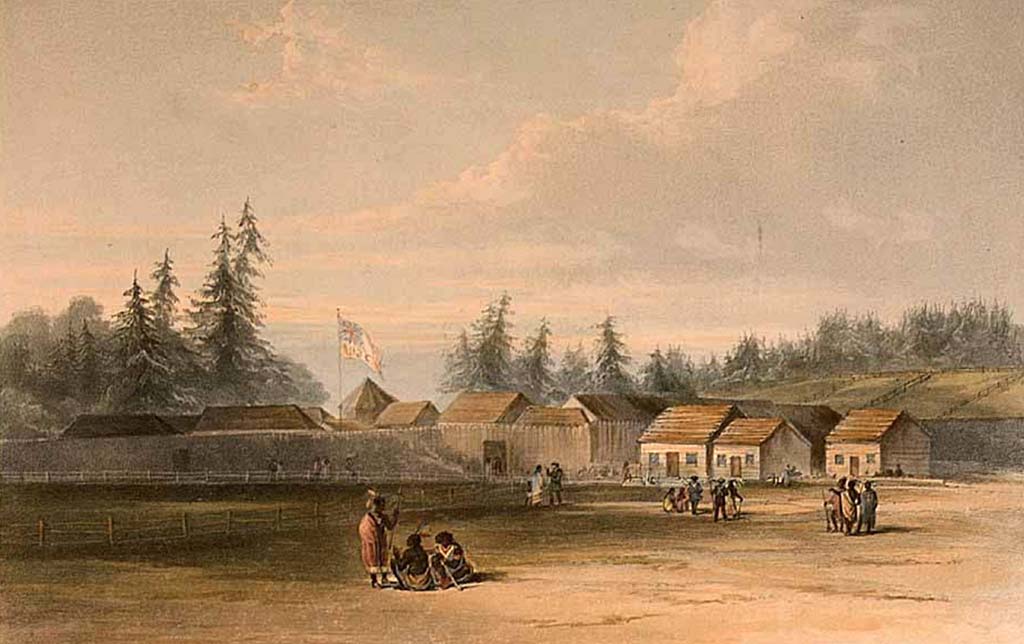
Sketch by Lt. Henry Warre, Courtesy UW Special Collections #WAS0374.
Between 1825-1835 David Douglas collected seeds, cones and seedlings of Douglas-fir throughout Oregon, Washington, California, Canada and Hawaii. His specimens were the first to survive the trip back to England where they were successfully planted as ornamental trees. Today Europe manages large sustainable Douglas-fir plantations to meet their need for lumber.
During his travels Douglas wrote of these trees as being “remarkably tall, unusually straight trees” and “one of the most striking and truly graceful objects in nature.”
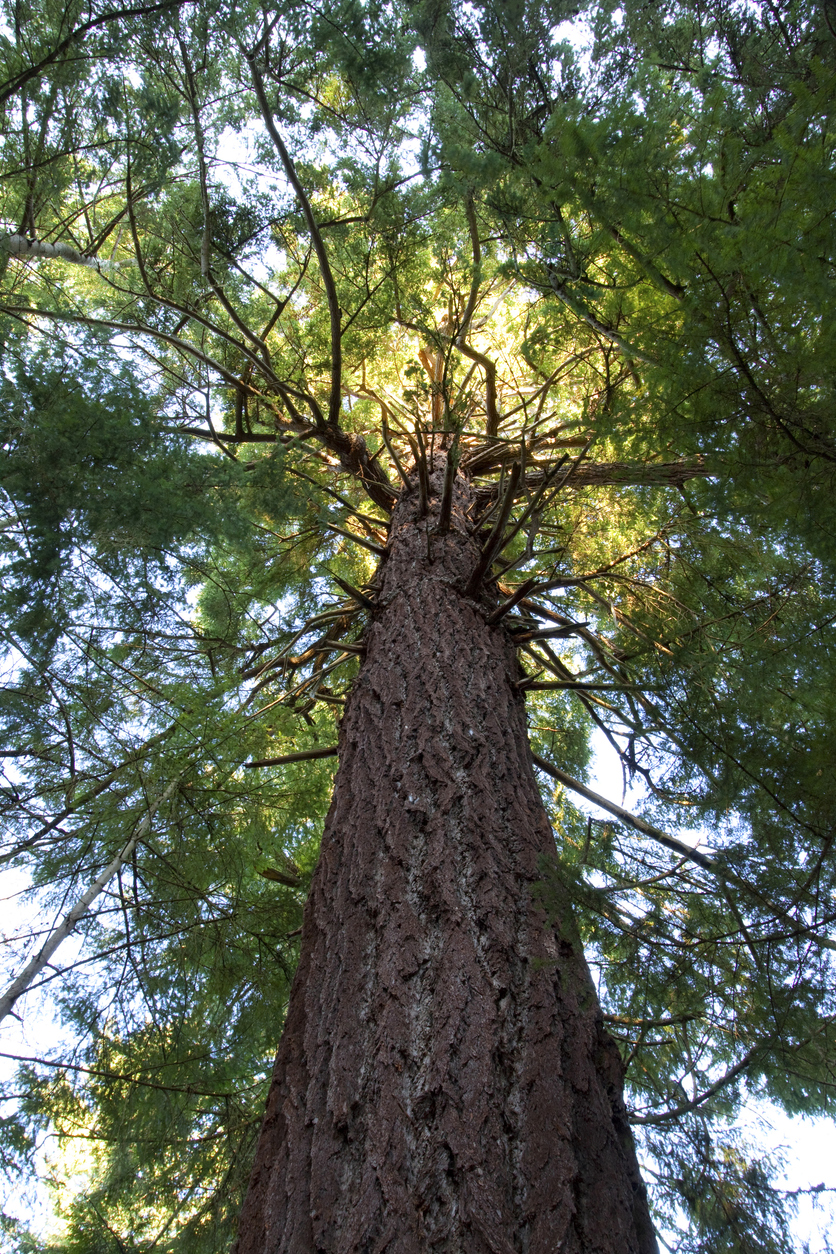
John McLoughlin saw the potential for developing a lumber industry that could serve the growing demand for structural lumber in California and Hawaii. In 1827, the Hudson’s Bay Company under the direction of John McLoughlin and Governor George Simpson (1792-1860) built the first sawmill in the Pacific Northwest at Fort Vancouver.
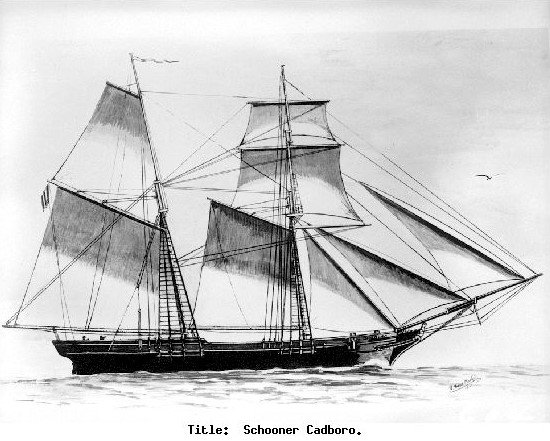
In 1829, the Hudson’s Bay Company landed its first schooner, the Cadboro, in Honolulu. Loaded with Douglas-fir lumber and smoked salmon, they hoped to establish trade between the “Islands” and Fort Vancouver. They were also hoping to find island laborers who were willing to travel and work in their sawmill.
Douglas-fir soon became known as the “pine of the north-west coast.” Hawaiians used it to build homes, businesses and canoes. In exchange they sent Hawaiian salt, fruit, nuts etc. to the Northwest. David Douglas traveled several times to the Hawaiian islands on various Hudson’s Bay ships to continue collecting specimens.
In 1833, John Lindley, a professor of botany, honored David Douglas by naming this tree Abies douglasii (Douglas fir), which was published in the Penny Cyclopedia. Shortly after this honor, Douglas died during an expedition on the Big Island of Hawaii.
Big trees, big opportunities…
Back in Oregon and Washington, Douglas-firs were being recorded for their size before being logged and turned into lumber. Soon the word was out regarding the potential riches found in the forests of the Pacific Northwest.
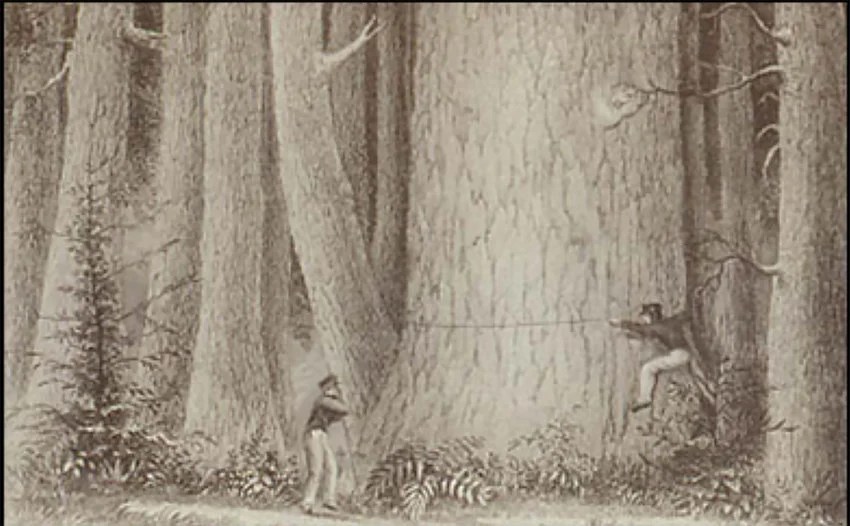
In the spring of 1843, a wagon train of almost 1,000 people began the “Great Migration” to Oregon Country via the 2000 mile Oregon Trail. They were drawn to the Pacific Northwest in hope of a better life and the promise of plentiful forests, clean water and free farmland.
By September 27, 1850, the United States Congress enacted the Donation Land Claim Act, which allowed white male settlers to claim, free of charge, 320-acre parcels (640 acres for married couples) of land in the Oregon Territory (Oregon, Washington, Idaho and parts of Wyoming). Those who settled in the western regions often claimed land dominated by old-growth Douglas-firs.
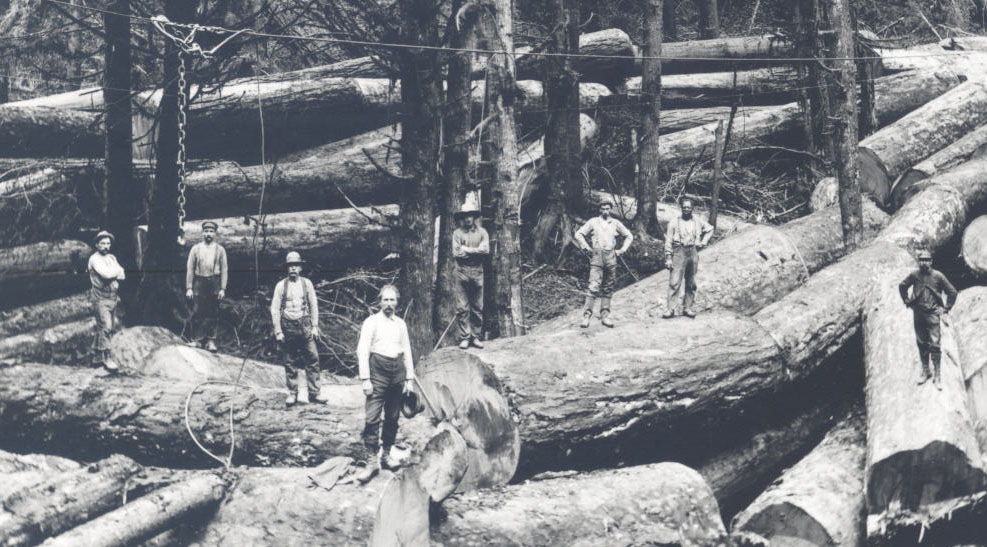
Some settlers saw these 200 ft giants as obstacles as they tried to clear their land for livestock and crops, unfortunately many of these majestic trees were burned in the process. Others saw opportunity.
When George Wasson, saw the potential he opened the first water-powered sawmill on the Pacific Coast in 1853 near Coos Bay, OR. Old-growth Douglas-firs were now hauled by oxen to sawmills.

The Oregon Trail of Tears…
By the time the Donation Land Claim Act ended in 1855, settlers had claimed 2.8 million acres of land in Oregon Territory from the U.S. government, who controlled 33 million acres. This lead to brutal confrontations between settlers, the government and the native people. Many tribes did not survive, especially those in the Rogue River Valley.
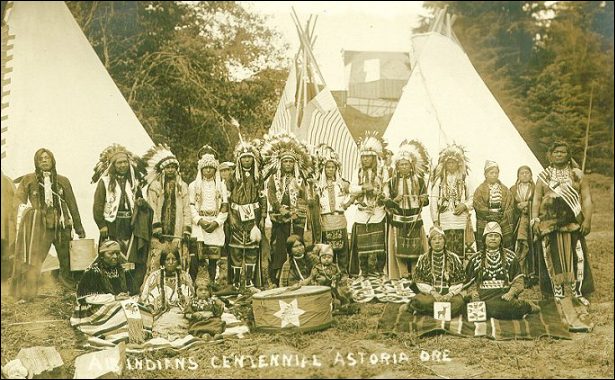
Under pressure to “protect” the settlers, and unable to honor the numerous treaties signed with various tribes, President Franklin Pierce issued an executive order that forcibly relocated 27 western tribes to the newly formed Coast Indian Reservation in Northwest Oregon. This reservation was originally 1.1 million acres in size, with a 120-mile stretch of coastland that contained the Alsea River. Two years later, in 1857, the government designated 61,000 acres within the Coast Indian Reservation to become the Grand Ronde Reservation to relocate 30 additional tribes from the Willamette and Umpqua Valley.
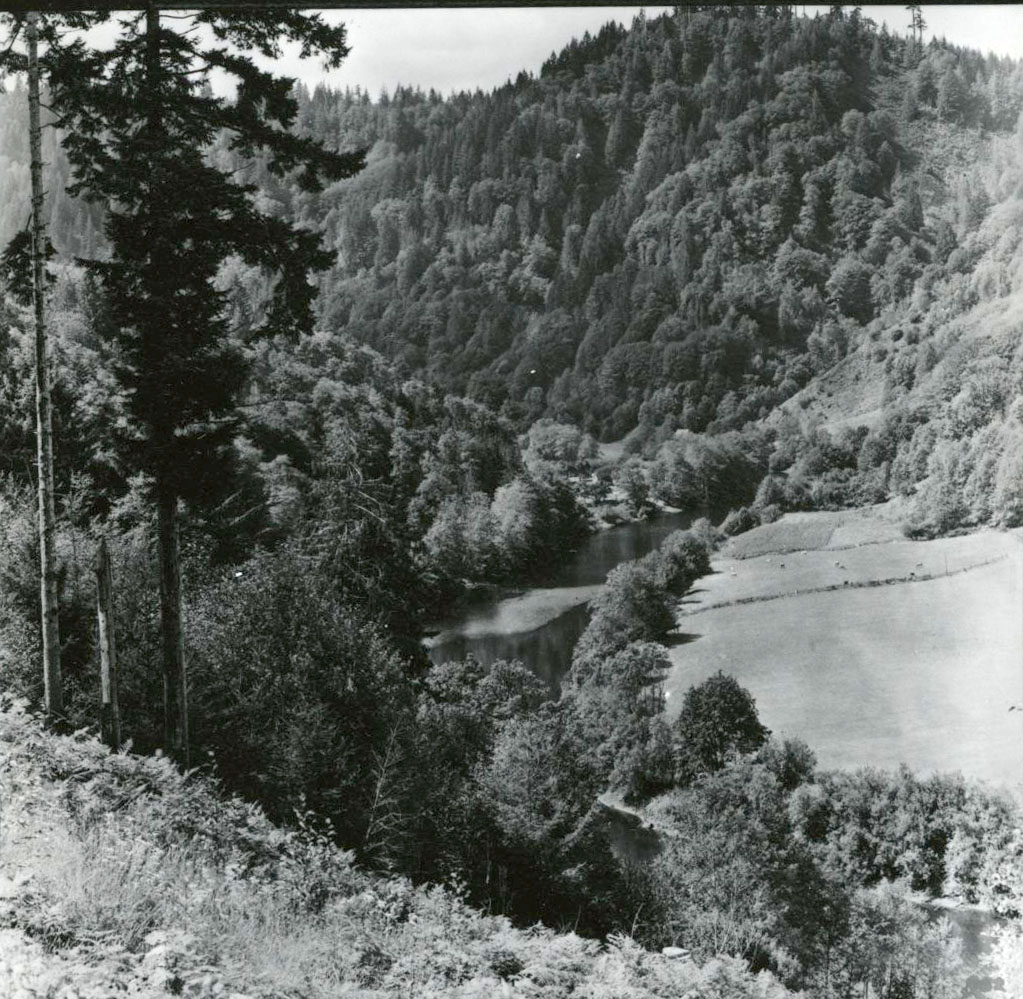
When settlers and timber companies began complaining about the amount of land designated for these tribes, the U.S. government began selling portions of it to appease their concerns.
In 1887 the Dawes Act (General Allotment Act) divided the reservation land into individual allotments. Since many of the native people were unable to fulfill the requirements necessary to maintain an allotment, they were sold at a fraction of the cost to settlers and lumbermen.
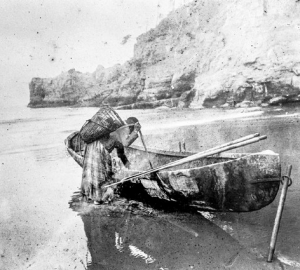
The Coast Indian Reservation continued to shrink in size until they lost all access to the coast. By 1875 it was renamed the Siletz Reservation. Today it covers 18,000 acres in Lincoln County and is owned by the Confederated Tribes of Siletz. The Grand Ronde Reservation is now 11,500 acres located in Yamhill County.
Oregon becomes a lumber state…
By the time Oregon became a state in 1859 the lumber industry was driving the state’s economy. To meet the demand for sawn timber, steam-powered technology was introduced to sawmills.
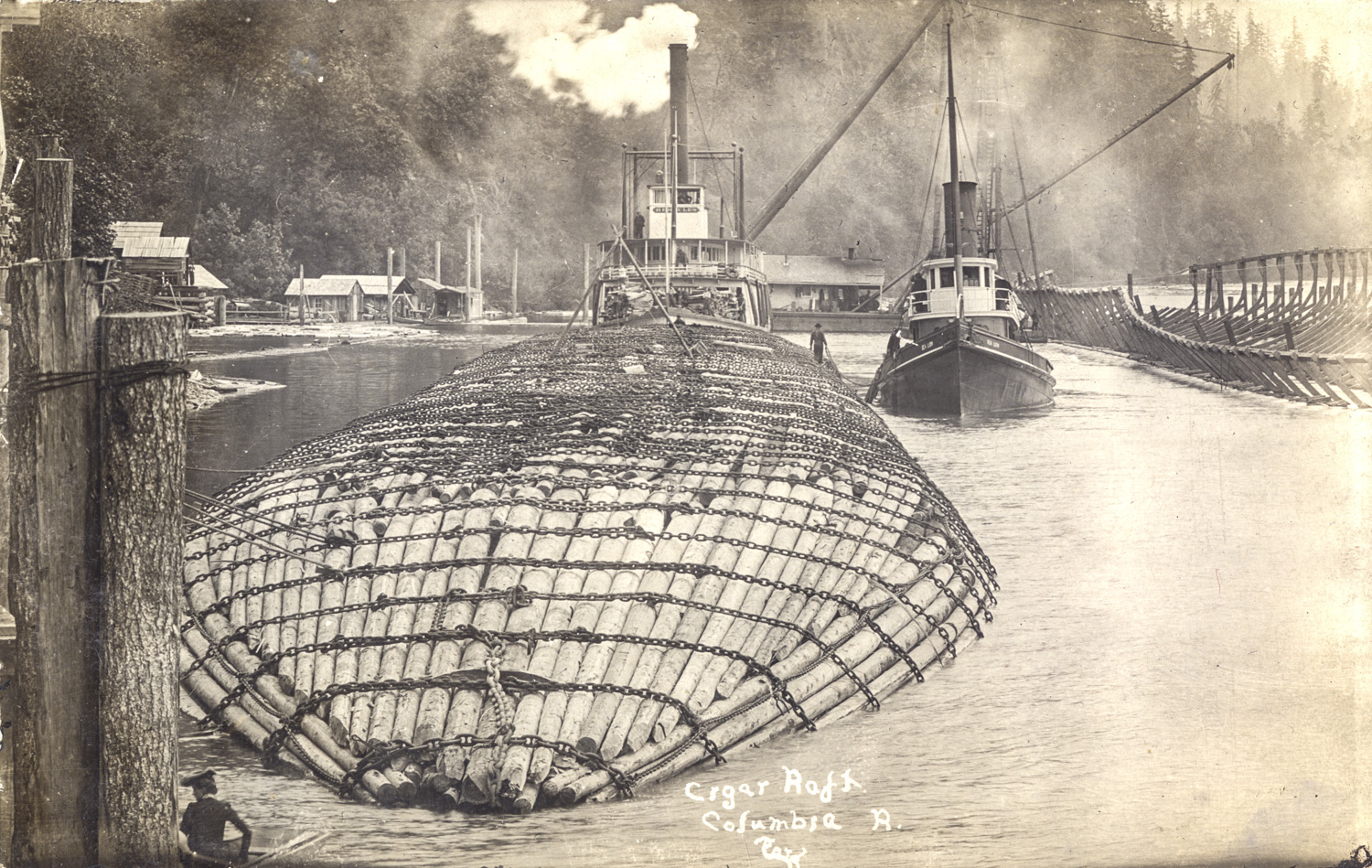
The Timber and Stone Act of 1878 allowed anyone who was a citizen of the United States, or was in the process of becoming one, to purchase 160 acres of “unfit farmland” for $2.50 per acre. Since most of western Oregon was dominated by forests of Douglas-fir, it was considered “unfit for farming,” which meant it was eligible to be sold.
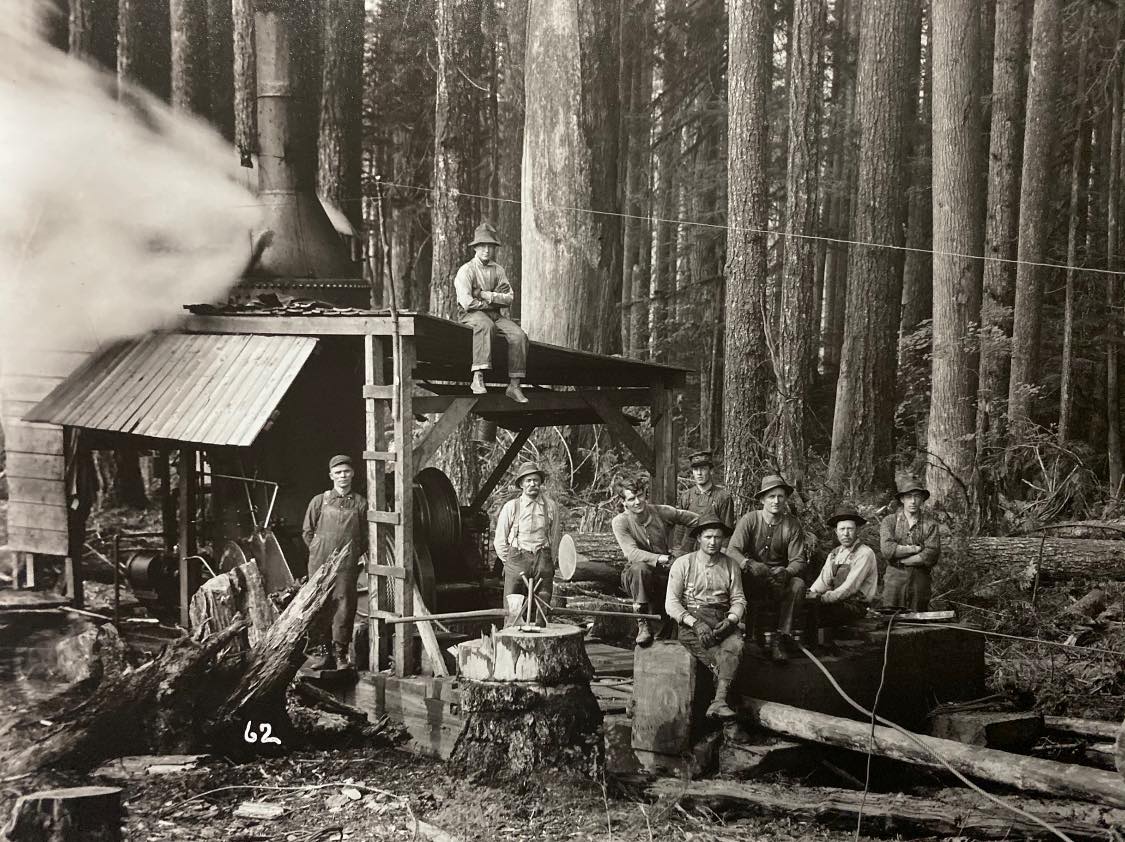
In reality, wealthy timber companies and private investors hired people to purchase these 160-acre parcels who then turned over their deeds to those companies. Even though this violated the law, these “lumber barons” were able to gain legal title to hundreds of thousands of acres of valuable timberland.
Between 1890-1920 hundreds of old-growth Douglas-firs were recorded to be 350 to 450 feet tall. The tallest recorded Douglas-fir was the Nooksack Giant in Maple Falls, WA. It was measured to be 465 feet in length and 11 feet in diameter. The ring count showed it to be 480 years old.
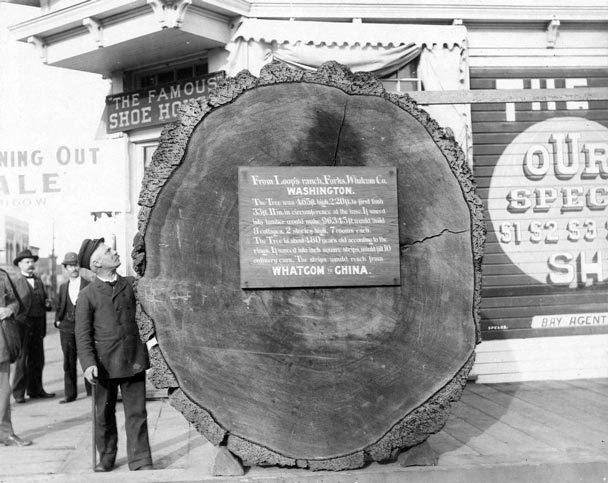
A cross-section was displayed in New Whatcom (Bellingham, WA) in 1897. The tree reportedly yielded 96,000 board feet of lumber.
It was soon becoming clear that these forests needed to be protected from what had happened to the forests in the East and Midwest. Congress passed the Forest Reserve Act in 1891 to protect old-growth forests on public land from exploitation by lumber companies, investors and settlers. Unfortunately it didn’t stop lumber companies from continuing to selectively cut down the largest old-growth trees for money. Fortunately the smaller trees that were left behind grew into “naturalized second old-growth” forests.
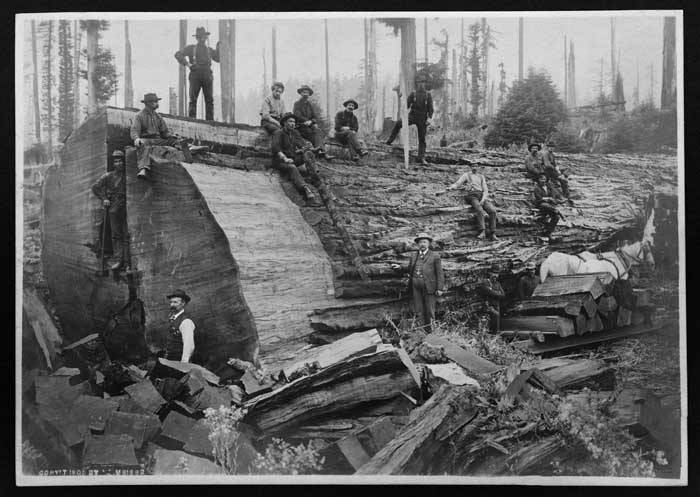
(University of Washington Museum of History and Industry Collection)
Lumber barons soon invested in railroads to connect these timber-rich forests to sawmills they built along the Pacific coast. Large-scale logging of old-growth Douglas-fir was now made easier with the use of steam-powered locomotives that ran on make-shift tracks.
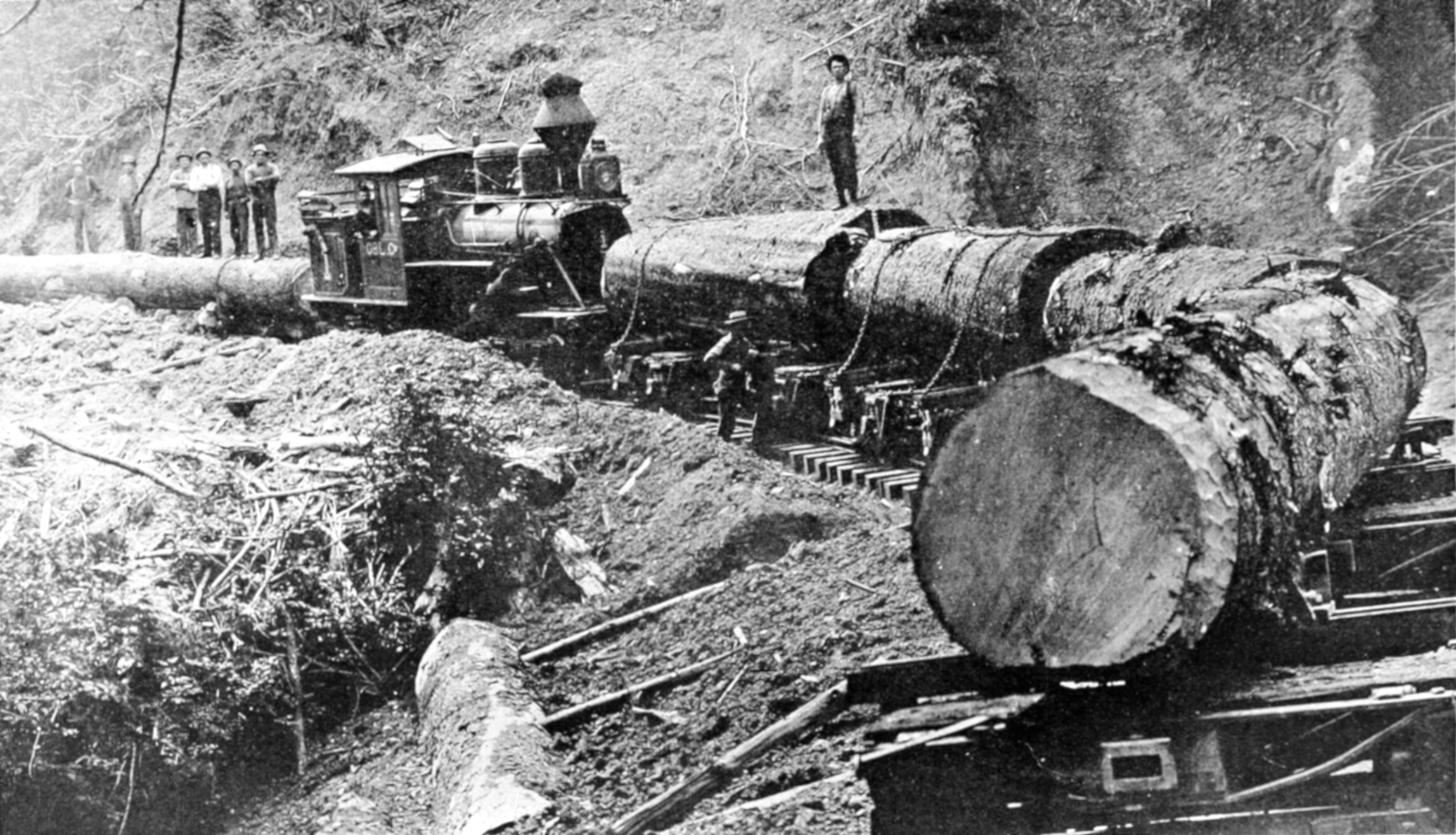
Note: The average age of the Douglas-firs brought to sawmills in the early 1900’s was between 400-800 years old. Any tree over 200 years old is considered old-growth.
Protecting the forests…
By 1905, the US Forest Service (USFS) was officially established to implement ways to protect and manage the national forests from wildfire, timber exploitation, poachers and grazing. They began mapping the forests, setting laws and charging permit fees to limit grazing, water use and timber sales.
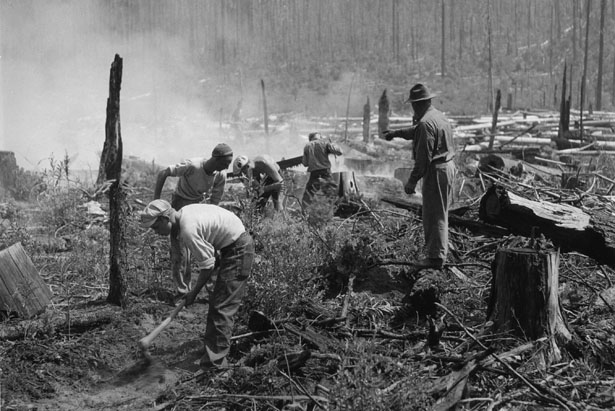
In 1911 the Oregon Department of Forestry (ODF) was created after a series of wildfires destroyed millions of acres of Douglas-fir forest. The fire of 1910, known as the “Big Blowup” destroyed over 3 million acres in the Pacific Northwest, including forests near Mt. Hood and southwest Oregon.
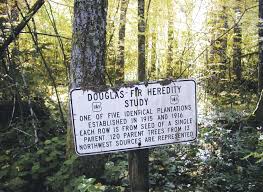
In 1912, the landmark Douglas-fir Heredity Study was one of the first in the Pacific Northwest to gather seeds throughout Oregon and Washington. The goal was to test their ability to grow into seedlings that could be successfully transplanted in areas that had been burned or logged.
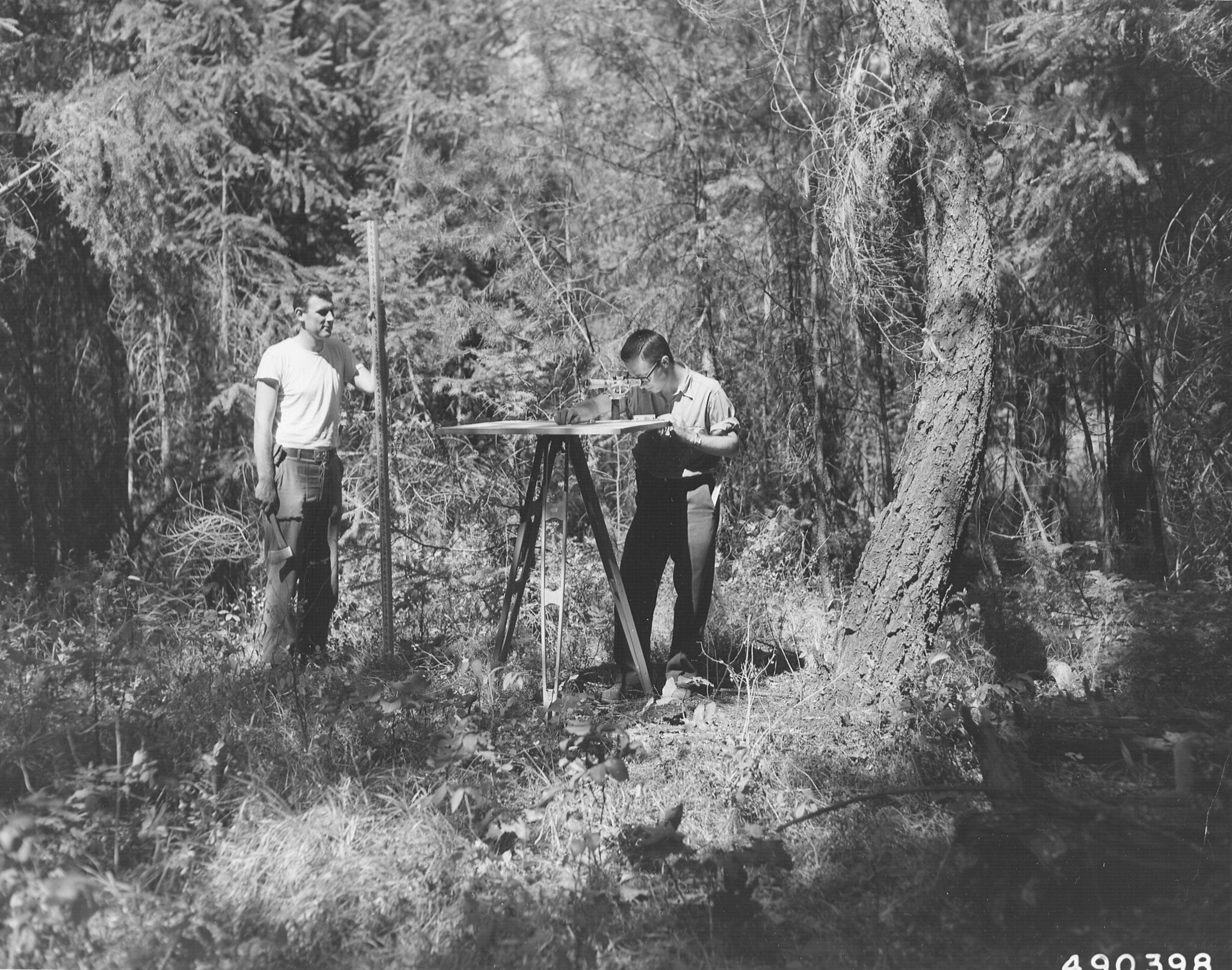
In 1928, the McSweeney-McNary Forest Research Act was the first attempt to map and classify the entire forested areas of Oregon and Washington. By 1930 they had mapped 26.7 million acres of total productive forest in Oregon alone. At the time there were 14.2 million acres of old-growth forest was still standing while 12.5 million acres were in the process of regenerating into naturalized second-growth forests.
“The major forest problem in the Douglas-fir region is the necessity for instituting a system for managing old-growth forests for continuous production. This means that clear-cutting over vast areas, which has resulted in large areas of non-stocked cutover land, must be halted.” – ODF Survey Findings

Creating sustainable forests…
The ODF began to focus on developing a sustainable program for Douglas-fir forests in areas that had been destroyed by fire and logging. They estimated that it would take 40-70 years for Douglas-firs to naturally regenerate or for planted seeds and seedlings to grow into harvestable trees.
In 1933 the Civilian Conservation Corps was called upon to help mitigate the damage caused by wildfires and logging. They also hand-planted over 40 million Douglas-fir seedlings between 1933-1942 on damaged land.
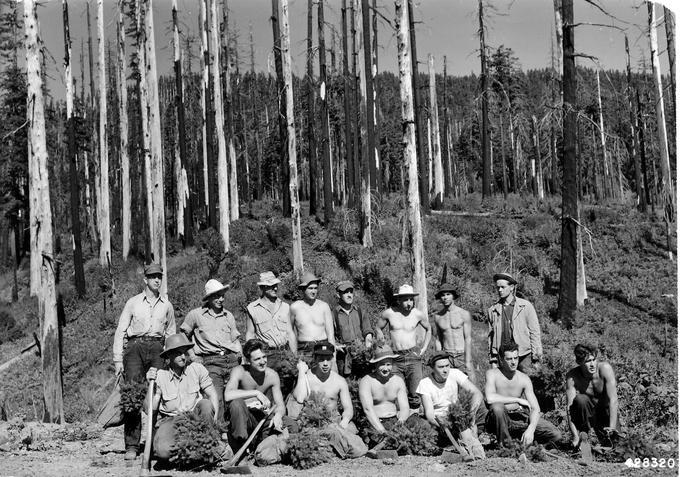
By 1938 Oregon was the leading producer of wood in the United States...
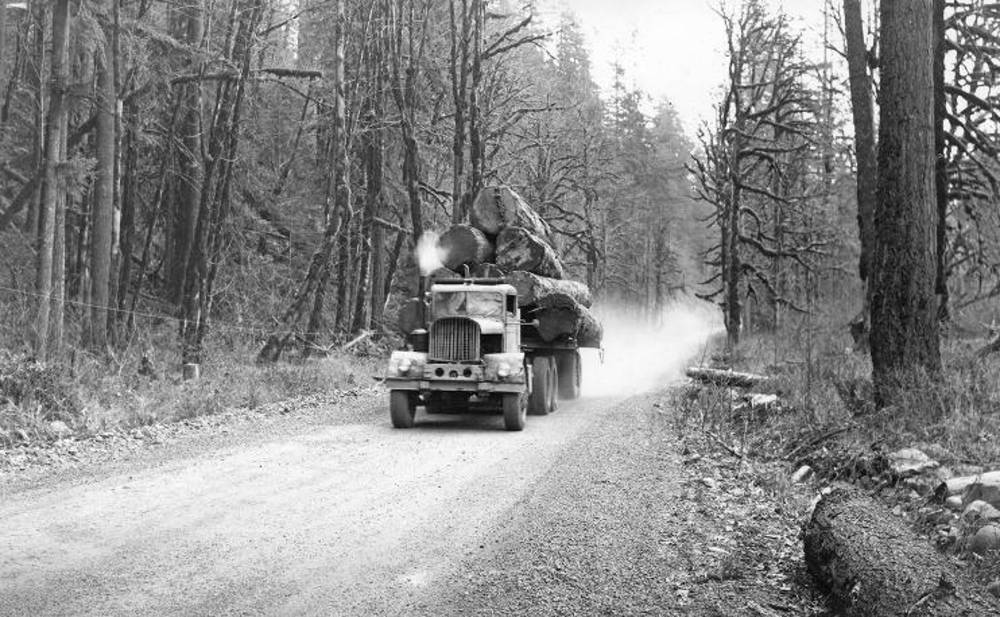
With the advent of gas-powered logging trucks, a large network of logging roads began weaving through the forests. Large patches of Douglas-fir continued to be clear-cut, harvested and slash burned to prepare the soil to receive seeds or seedlings.
Old-growth is cleared for second-growth forests…
The 1941 the Oregon Forest Conservation Act promoted clear-cutting in order to create new successive sustainable forests. They now required all lumber companies to plant Douglas-fir seedlings after they were done clearing the land. Ironically, this led to even more clear-cutting of old-growth forests to make way for these new successive second-growth Douglas-fir forests to grow.
They believed that since Douglas-firs require lots of sunlight to grow it would be beneficial to clear all of the trees in one area to expose the seedlings and forest floor to sunlight. But these large clear-cut patches allowed too much direct sunlight, which heated up the ground, making it too hot and dry for the seeds or seedlings to grow.
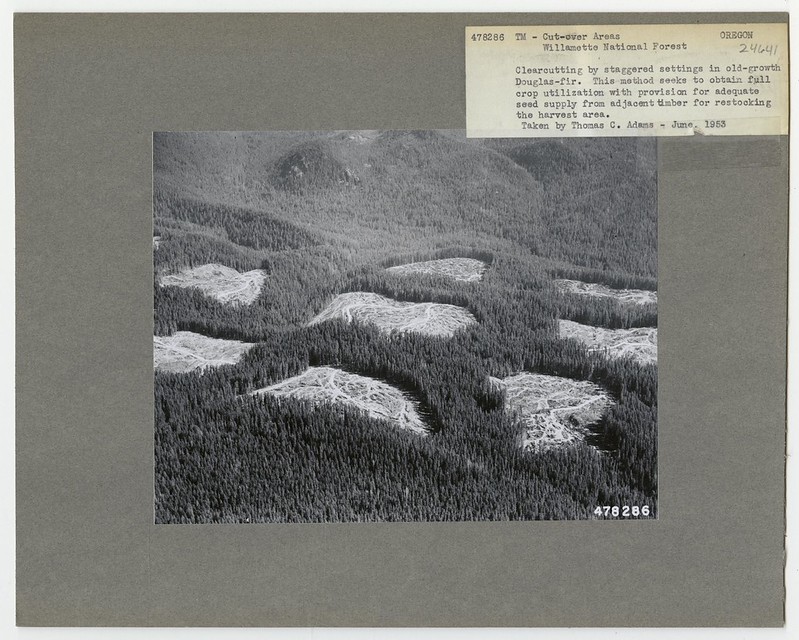
One solution was to clear-cut smaller, staggered areas that would allow for nearby tees to provide shade, hoping that those trees would naturally release seeds.
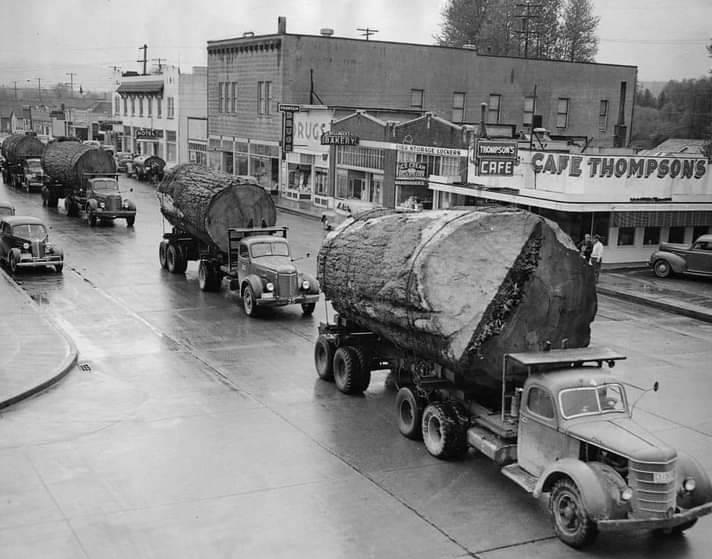
As the timber industry tried to meet the rapid demand for lumber, diesel-powered trucks and machines made it easier to clear-cut large areas of old-growth forest and transport it to local sawmills.
In the 1940’s after WWII, the demand for quality timber increased dramatically. Douglas-fir was now the wood of choice for large timbers, structural lumber, plywood, veneer, railroad ties, flooring and paper manufacturing.
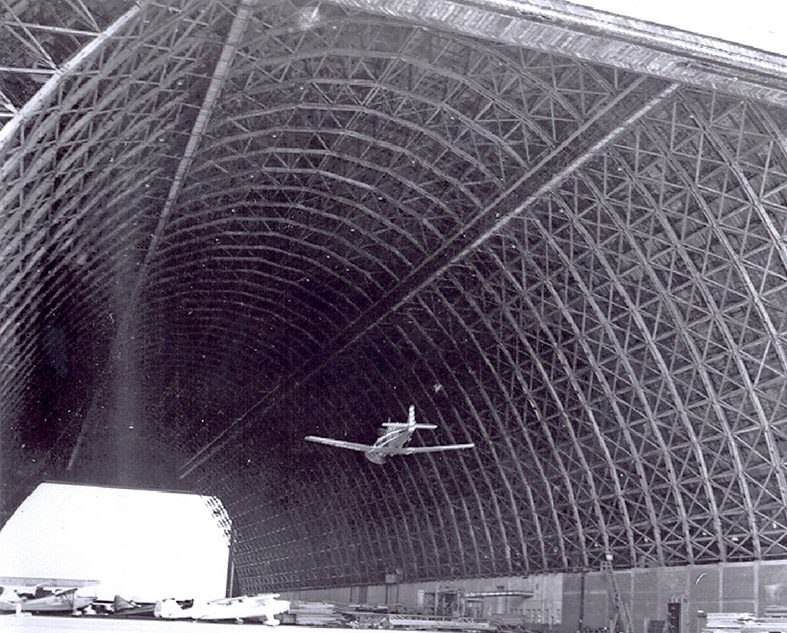
An example of this is the Tillamook Naval Air Station, which was built in 1943 using 3.3 million board feet of old-growth Douglas-fir timber. Today it is the site of the Tillamook Air Museum.
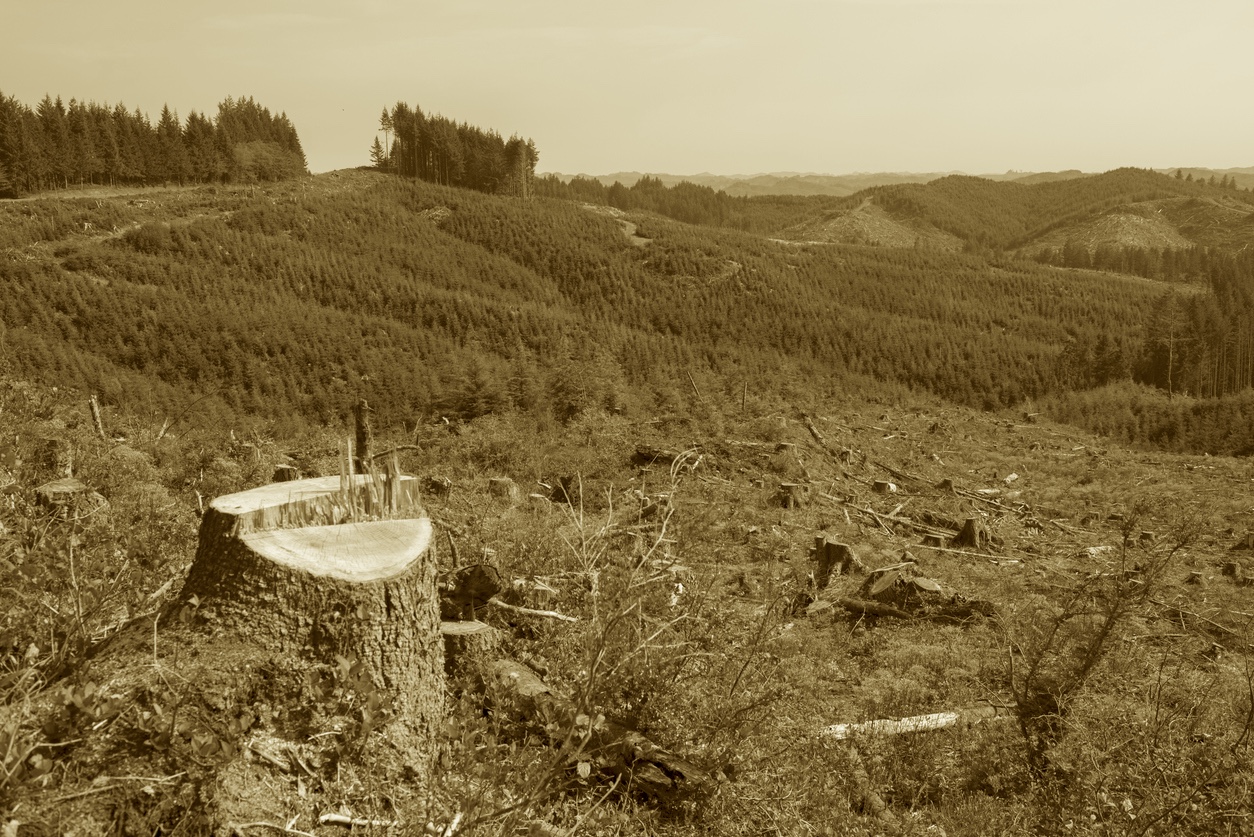
In the 1950’s experiments using different types of modified clear-cutting was implemented to determine the best practices for successive reforestation.
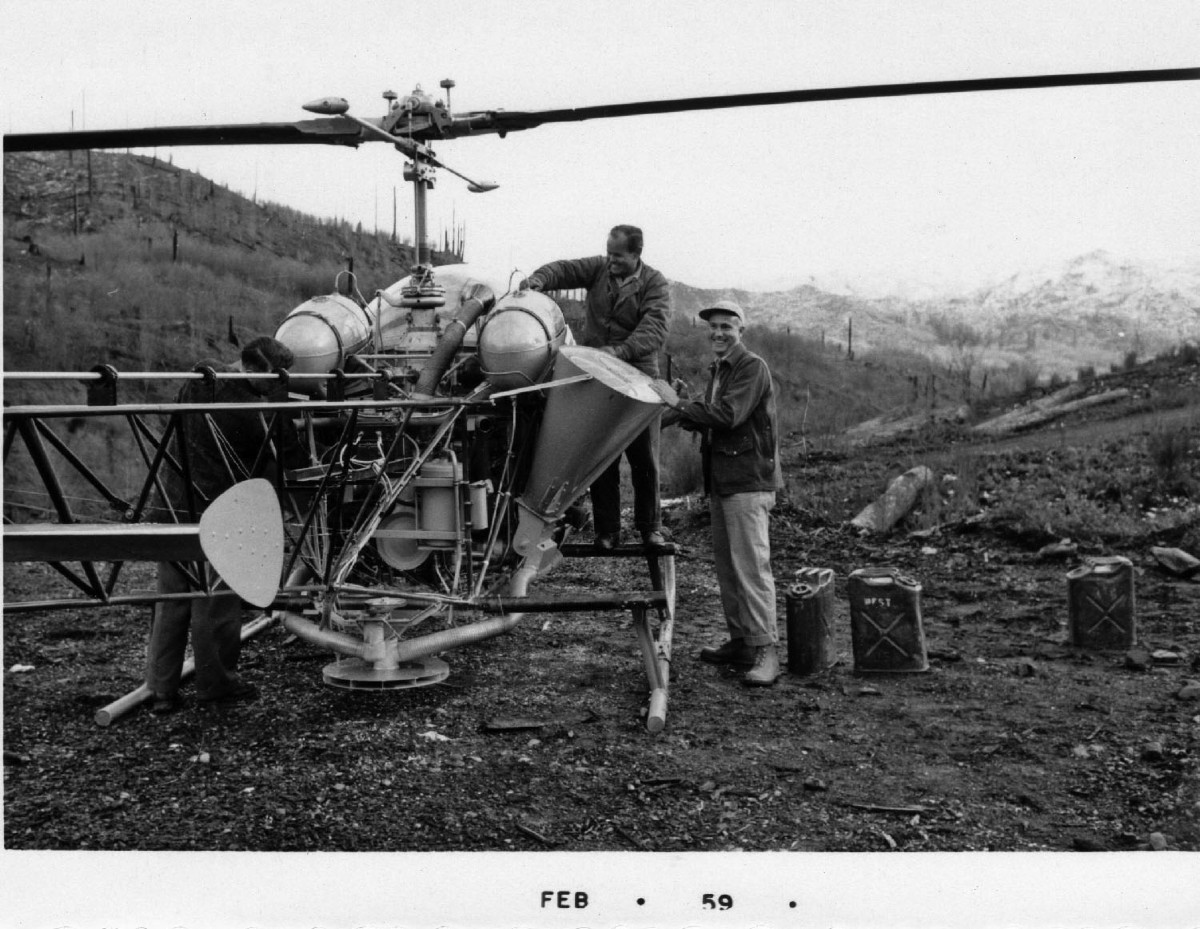
Helicopters were used to seed Douglas-fir in areas that were hard to reach. These seeds were coated to deter rodents from eating them before they could germinate. If a seed became a seedling 30% of them were then eaten by deer and elk. Those that survived grew to become “second-growth” plantation forests. These forests could be harvested as soon as the 1990’s.
The Tillamook State Forest is a perfect example of a planted “second-growth” Douglas-fir forest. Several large wildfires between 1933-1951 had ravaged the forests. In 1949 the Oregon Department of Forestry ODF took ownership of 355,000 acres from private landowners who abandoned the land. They cleared burned-out tree snags and prepared the land for planting.
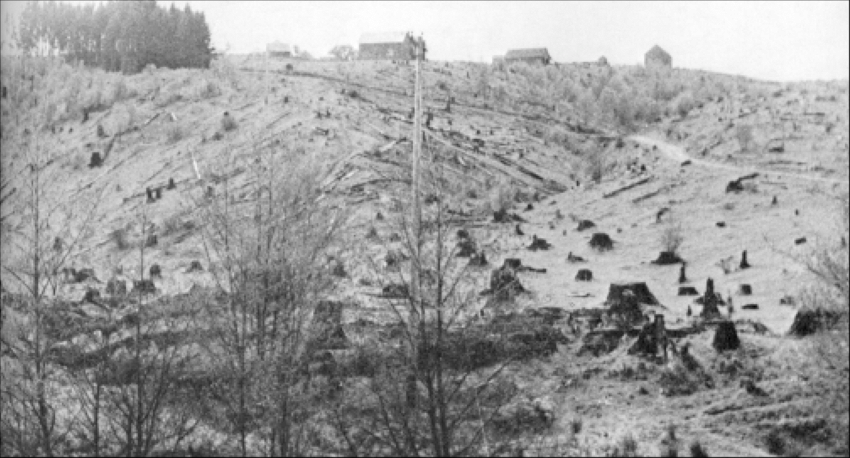
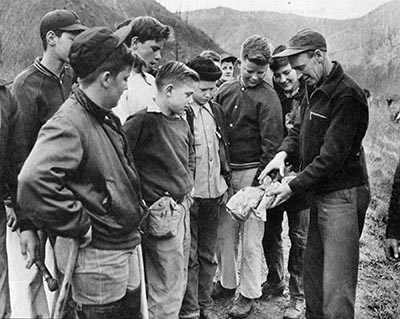
Hundreds of local volunteers and Oregon school children hand-planted millions of Douglas-fir seedlings between 1950-1970.
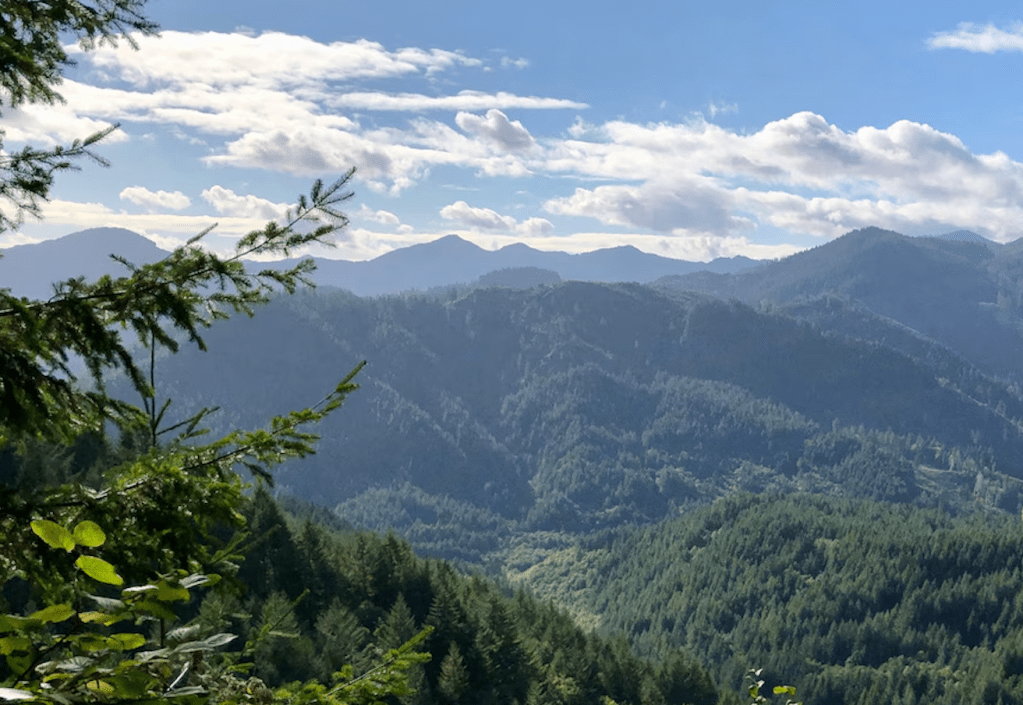
Today the Tillamook State Forest covers 364,000 acres. It also features a Forest Learning Center that is surrounded by 7-million hand-planted Douglas-firs.
Both aerial seeding and hand-planting seedlings took off in the 60’s and 70’s. The US Forest Service, along with private timber companies, began planting fast-growing monoculture plantations to keep up with the growing demand for lumber.
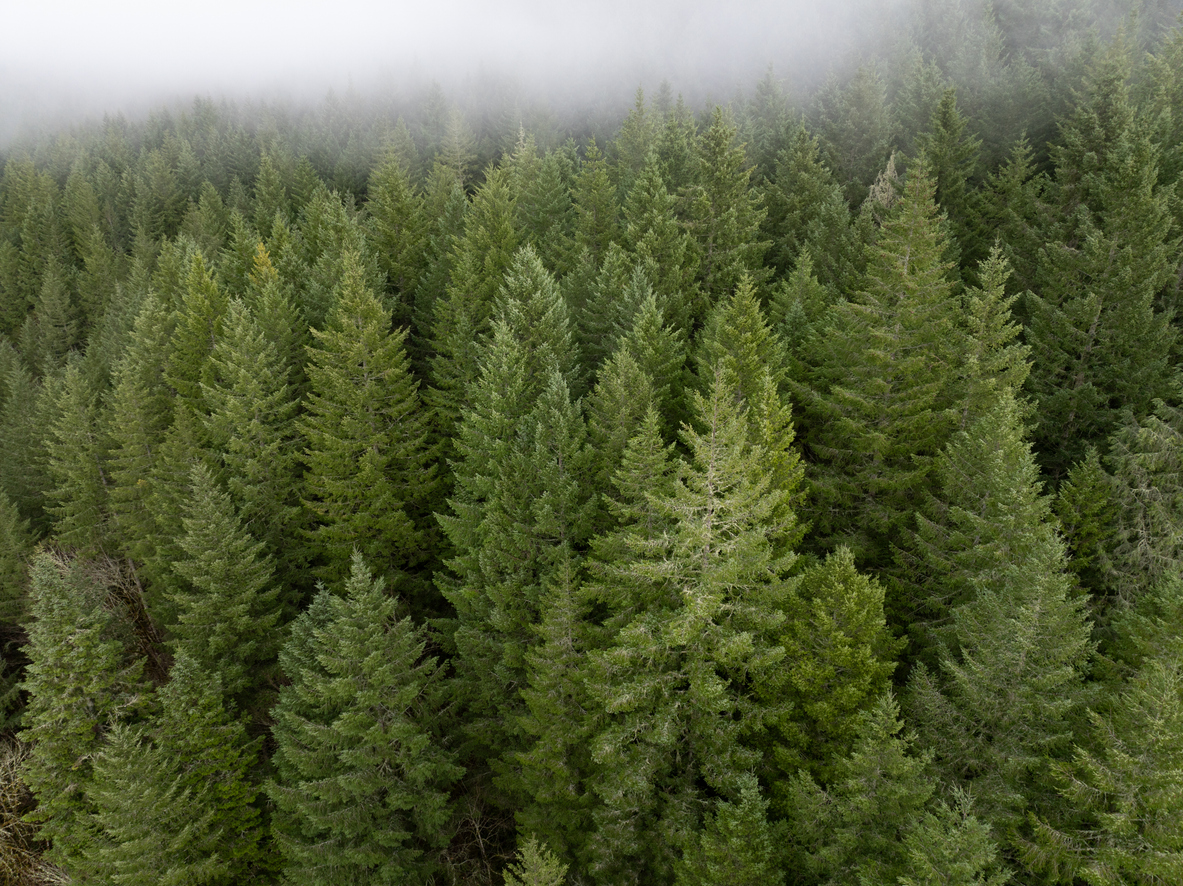
This meant that the diverse, species-rich old-growth forests were being transformed into mono-culture second-growth forests. Many of them were planted exclusively with Douglas-fir that could be harvested in 40-60 years.
In 1962, more than one-fifth of the nation’s lumber was still coming from old-growth forests, because the second-growth forests were too young to harvest.
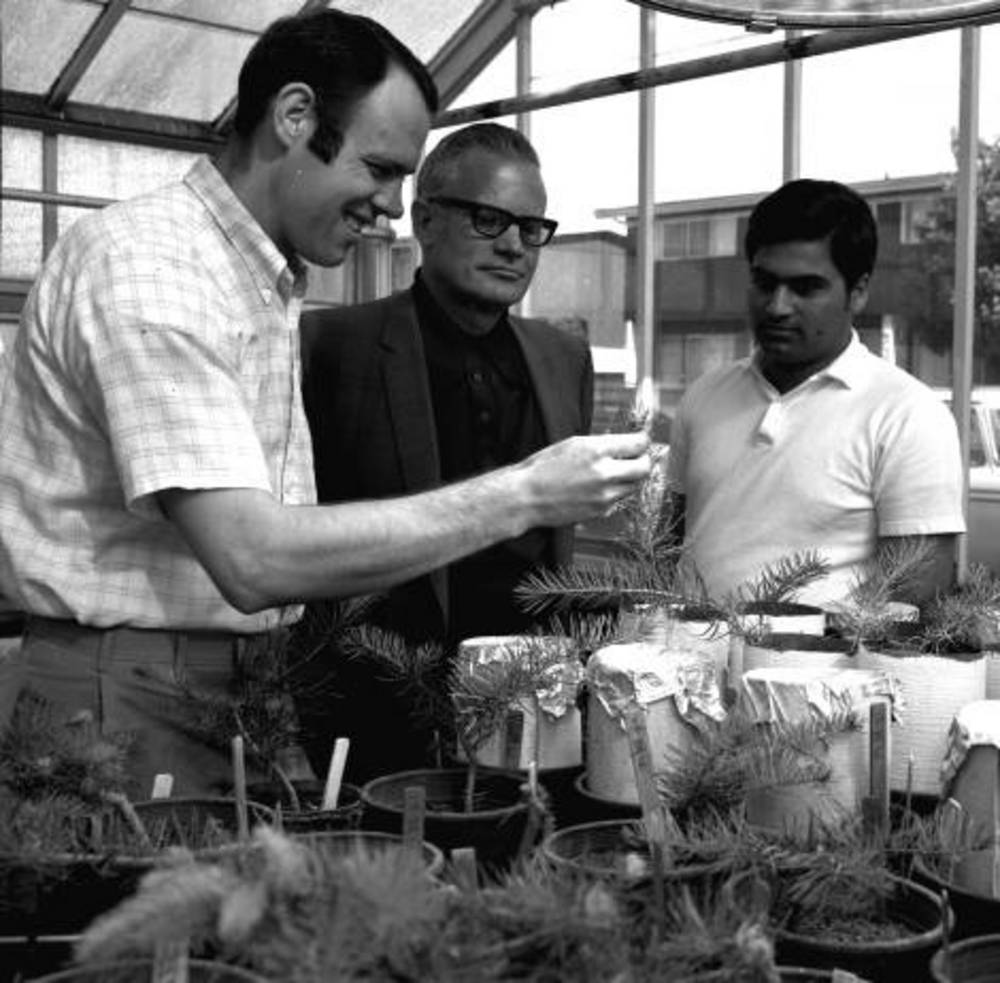
Lumber wasn’t the only reason that Douglas-firs were grown in plantations. They had been a popular choice for Christmas trees since the 1920’s, when they were harvested in the wild.
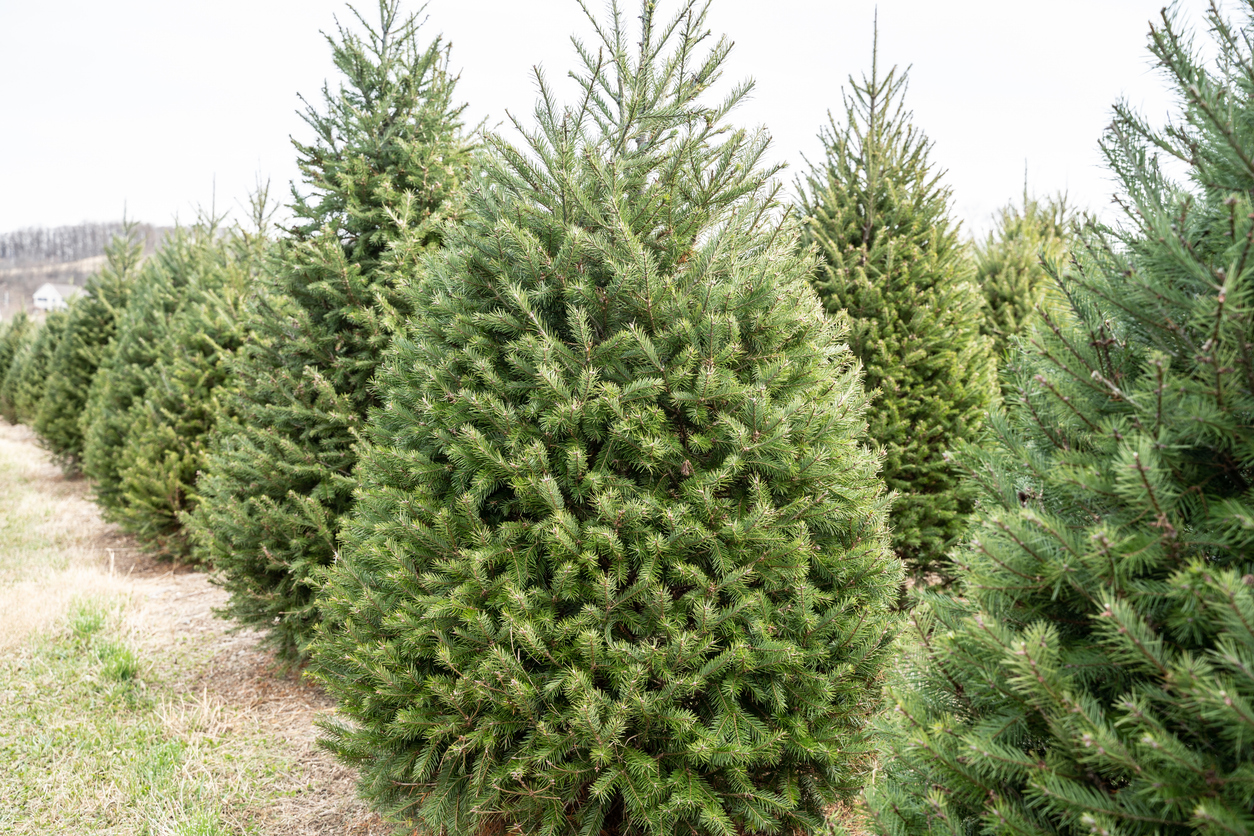
Christmas tree plantations began in the 1950’s and 60’s, where it takes 7-10 years for them to grow into a viable tree. Today Oregon is the #1 producer of Christmas trees with over 33% of the nation’s market.
The champion of the building industry…
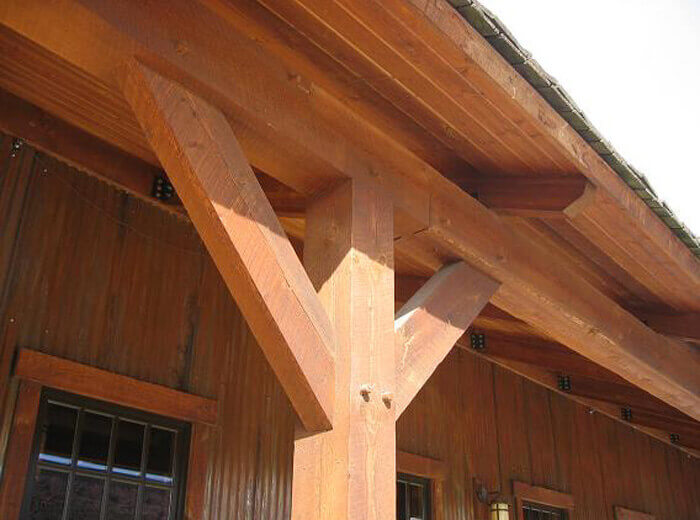
Douglas-fir is considered to be the champion of the building industry because of its size, strength, and stability. It’s one of the strongest softwoods, which makes it an ideal choice for laminated beams, framing, floor joists, trusses, siding etc.
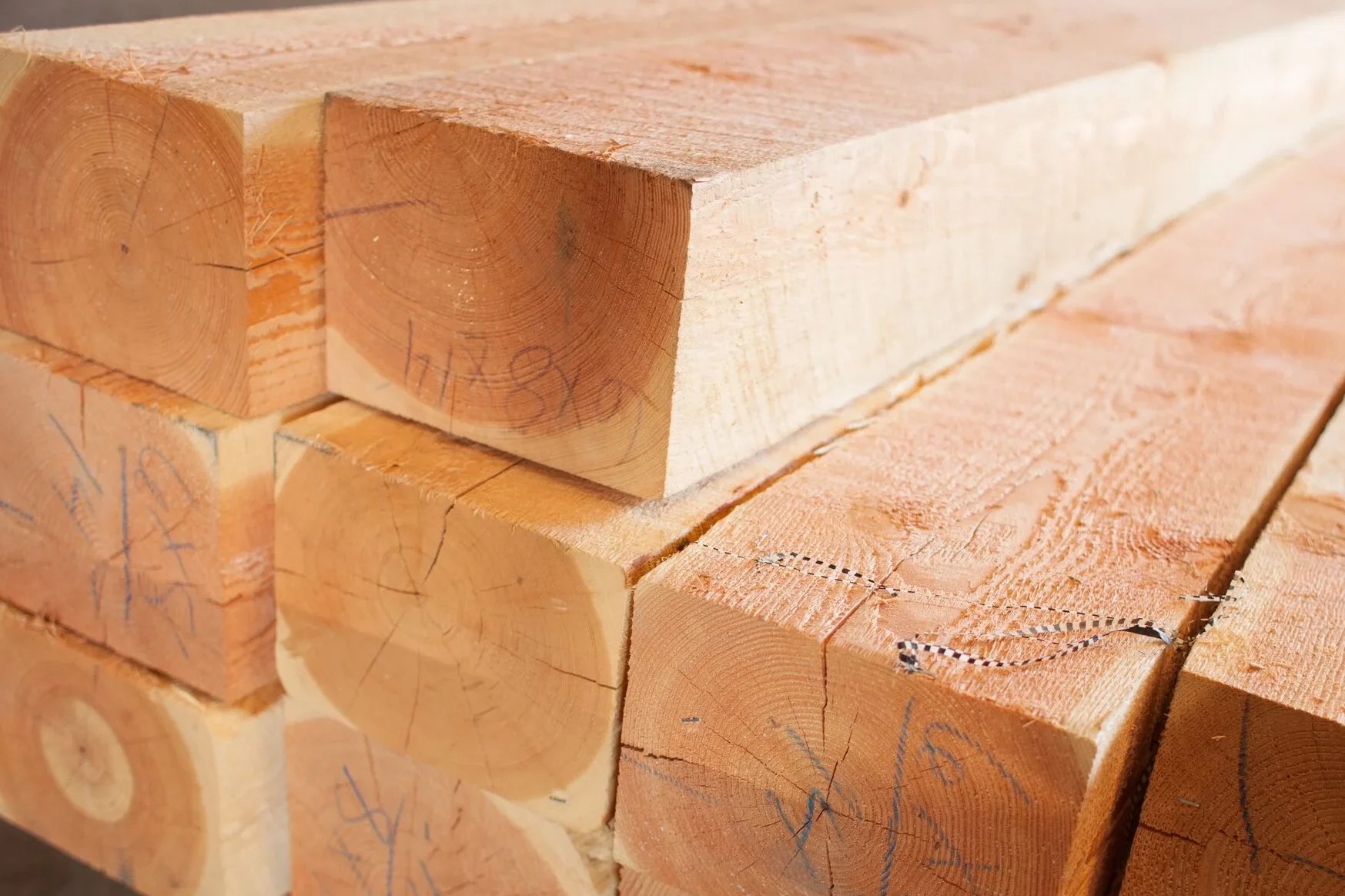
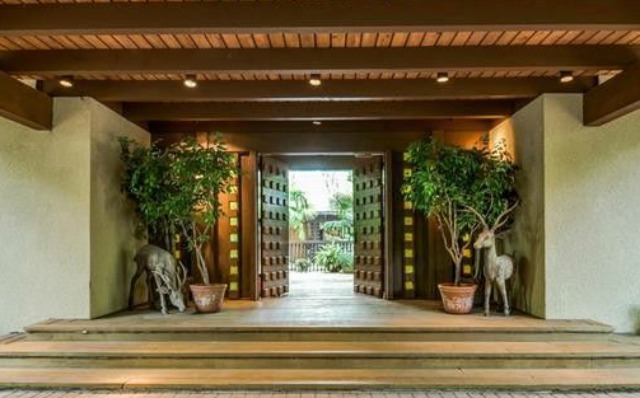
Architects often specify Douglas-fir because of its fine, straight grain, exceptional size and warm tone. Frank Lloyd Wright included Douglas-firs in his designs, especially his Usonian homes, which featured large exposed beams designed to blend in with nature.
Despite being classified as a softwood, Douglas-fir’s high strength-to-weight ratio makes it stronger and easier to handle than most hardwoods. Plus it offers superior structural support than other conifers for home and commercial buildings. Chances are if you live in a wood-frame home, Douglas-fir was used in its construction.
Changing and challenging times…
Oregon was the first state to pass a comprehensive Forest Practices Act (FPA) in 1971, which regulated forest practices on private and state owned land. The ODF’s goal was to protect soil, water, fish and wildlife habitat. Clear-cutting was now limited to 120 acres per unit. Private landowners and state forests were now required to replant those acres with seedlings within two years. Regulations restricting the harvesting of trees along streams, wetlands or lakes went in effect to prevent sediment flows, provide shade and protect fish habitat.
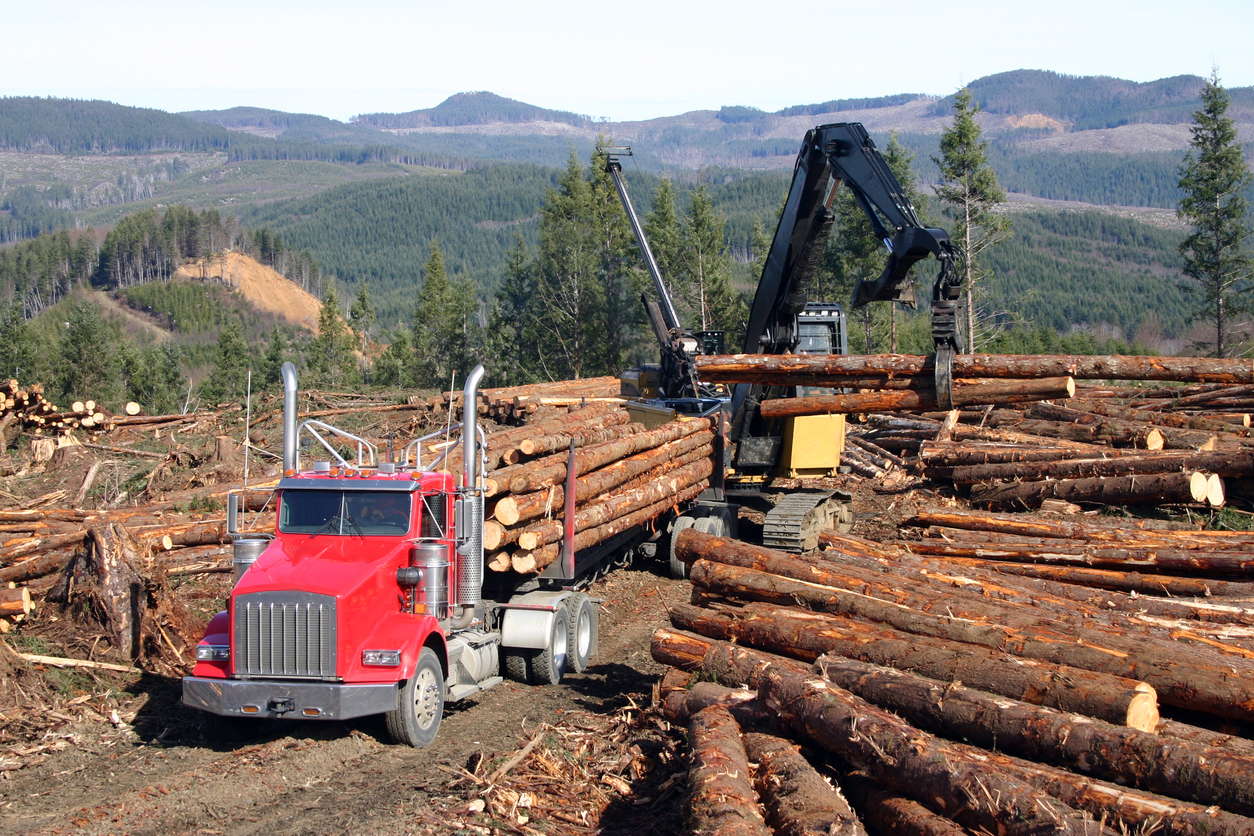
By the early 1980’s most of the old-growth Douglas-fir on private forestland had been harvested, so the timber industry began harvesting the younger, smaller trees from their naturalized second-growth forests.
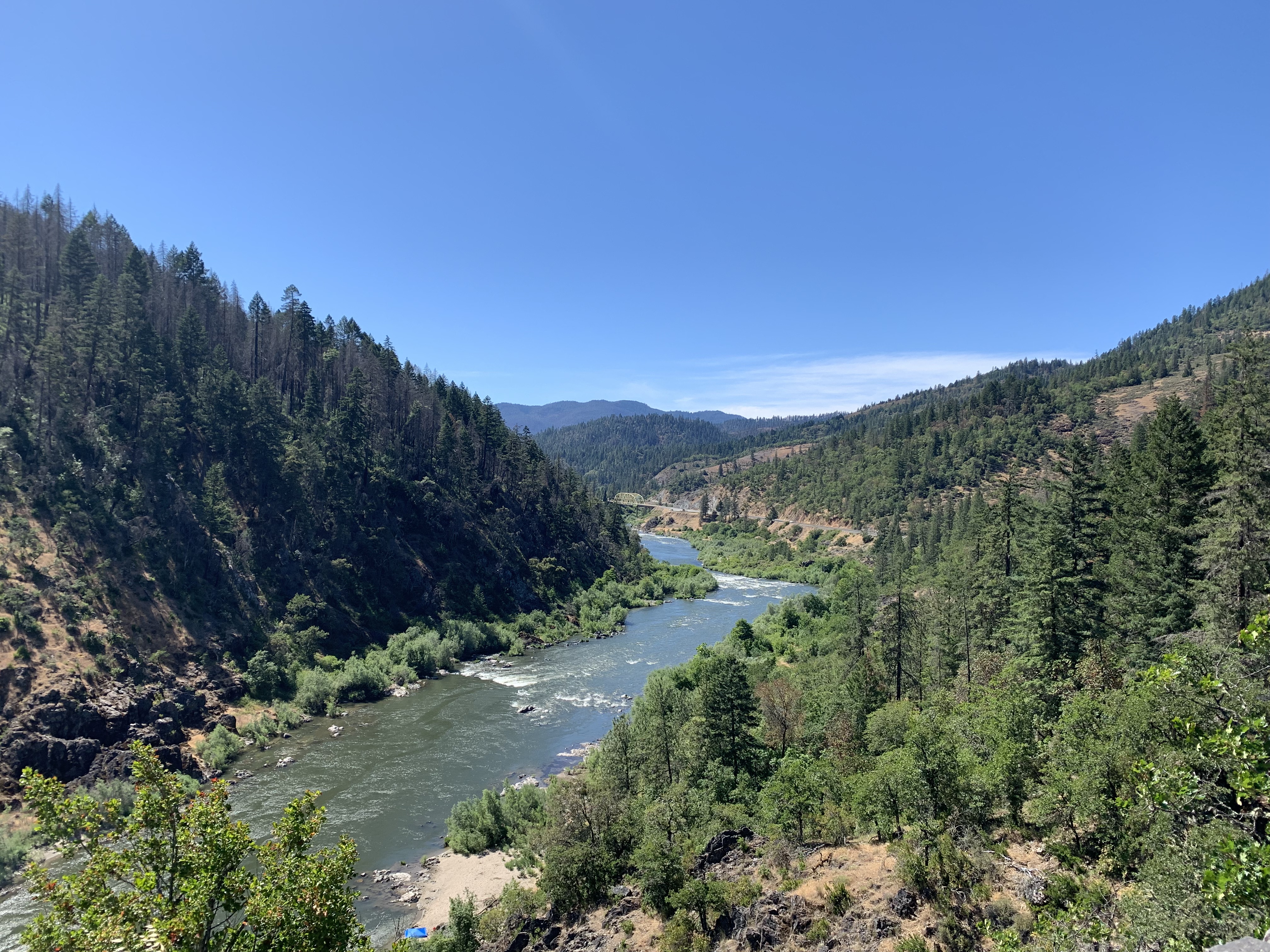
Ongoing wildfires and decades of clear-cutting had left the mountainous terrain of western Oregon open to landslides, which often ran into nearby rivers and streams.
Combined with the lack of shade that trees had provided along rivers and streams, water temperatures rose and oxygen levels dropped. All of this harmed the salmon population that depended on Oregon rivers to spawn and reproduce.
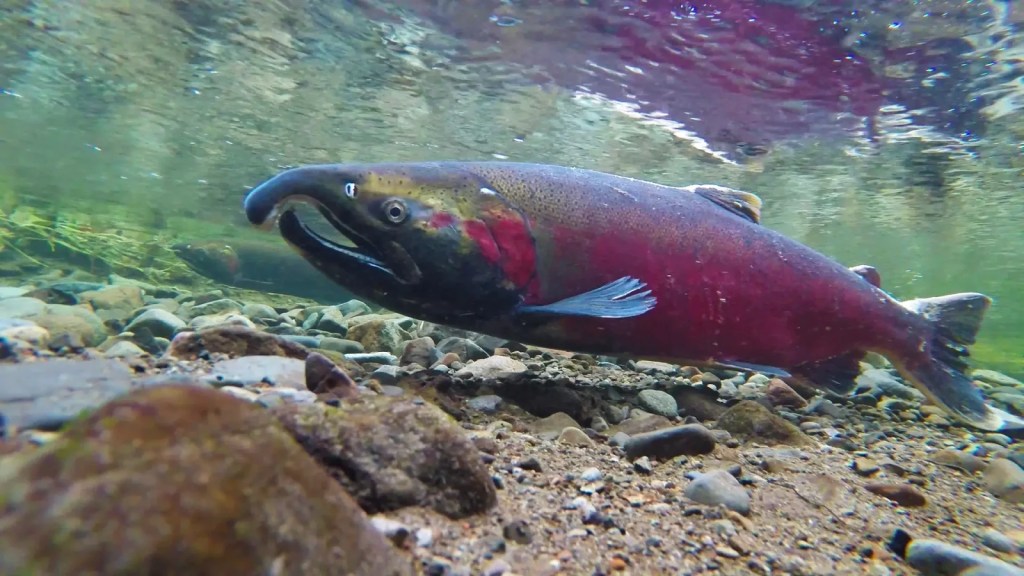
The Endangered Species Act of 1973 was designed to protect and conserve habitat for endangered species. On June, 1990 the Northern Spotted Owl (Strix occidentalis caurina) was officially added as a threatened species in Oregon, Washington and Northern California. Since they typically live in old-growth Douglas-fir forests, this affected the ability to harvest trees on private and state land.
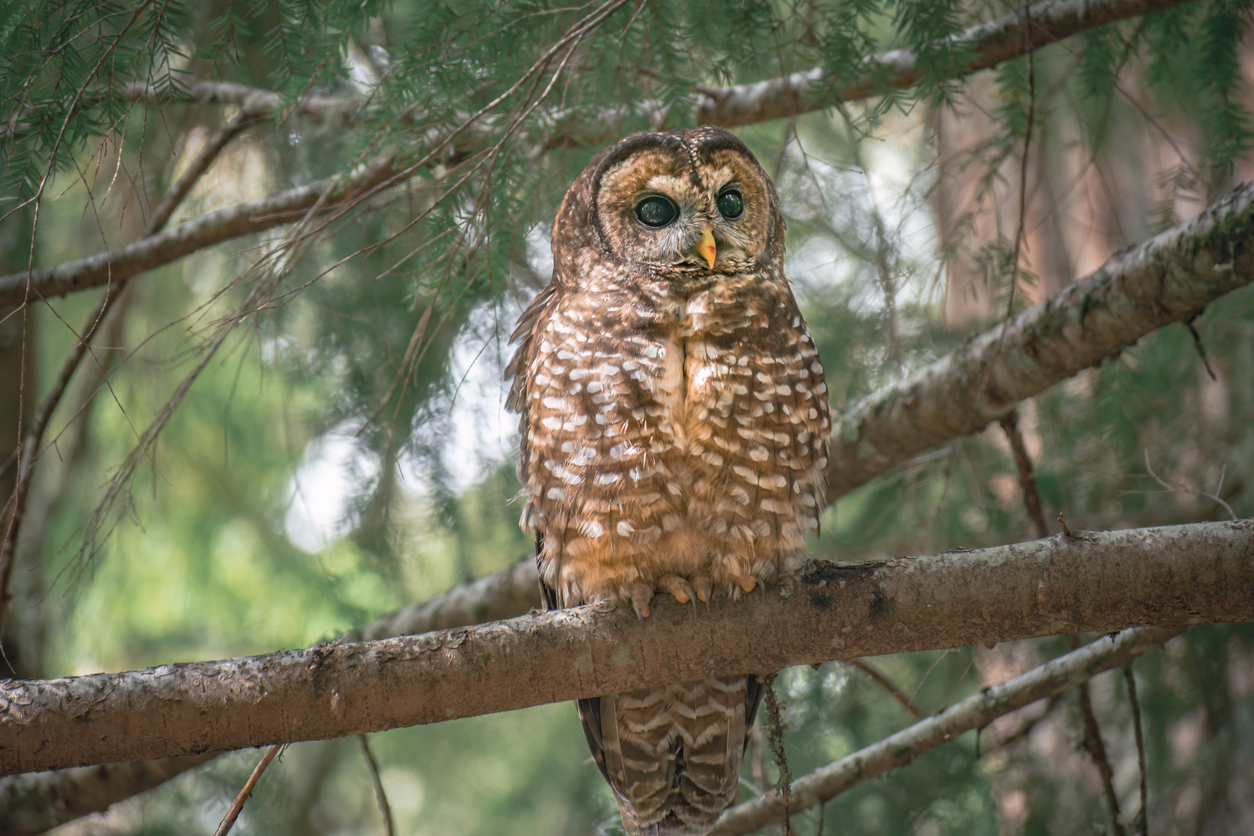
Conservation efforts soon shifted to the two million acres of old-growth Douglas-fir still standing on federal land, managed by the BLM and the USFS. In 1997 it was recommended that 300 acres of federal old-growth forest be protected for each pair of northern spotted owls. This ruling effectively protected all old-growth forests on federal land.
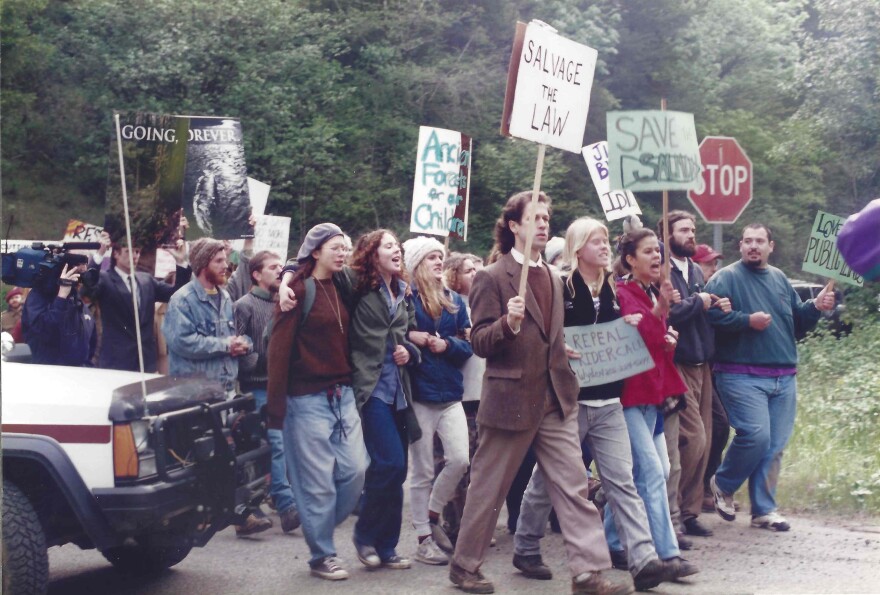
As a result, timber sales plummeted. Conflicts arose between the lumber industry, environmentalists and government officials over the restricted logging of old-growth forests. This along with decreased income for local communities from the logging severance tax dealt a financial blow to many logging communities in western Oregon.
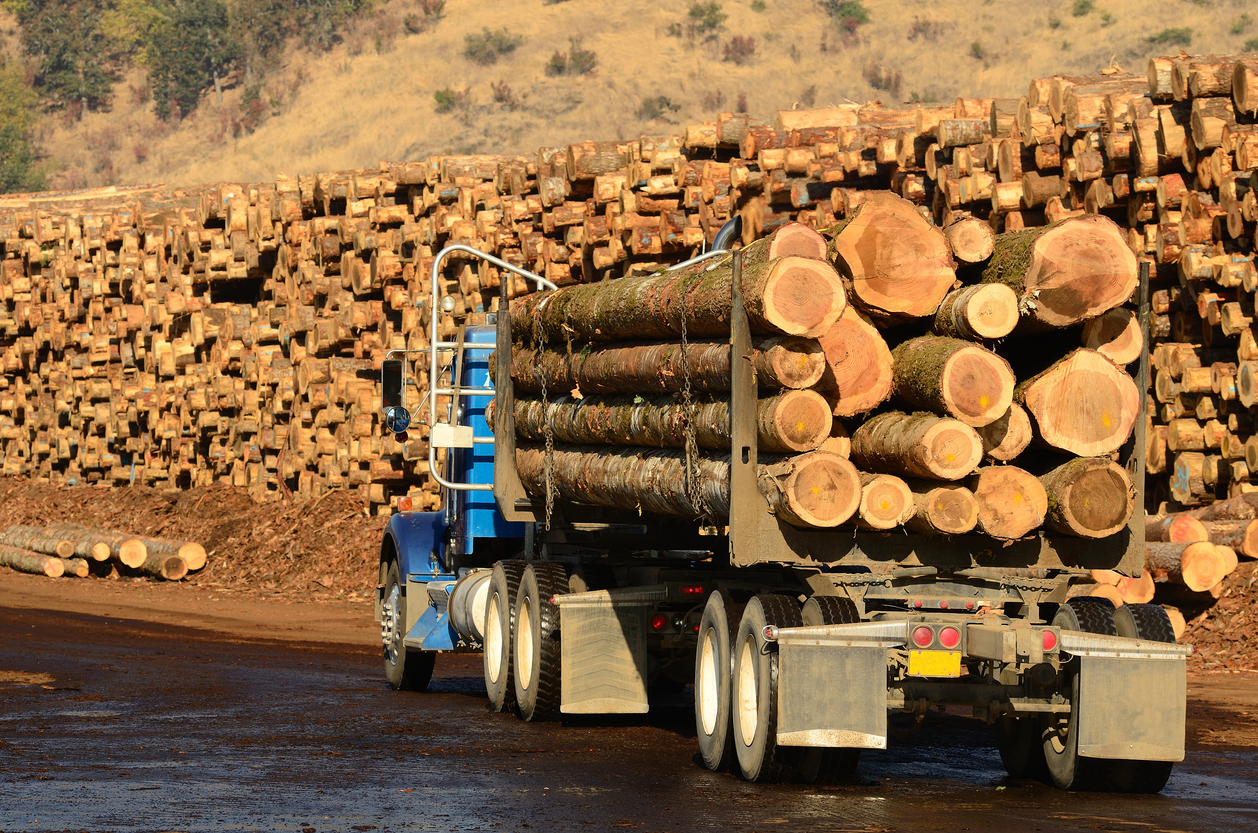
In 1994, large-scale clear-cutting on federal forestland (BLM & USFS) was basically stopped in Oregon and Washington due to the Northwest Forest Plan. The focus now shifted from timber production to conservation. Policies for managing federal forestland supported thinning and selective harvesting.
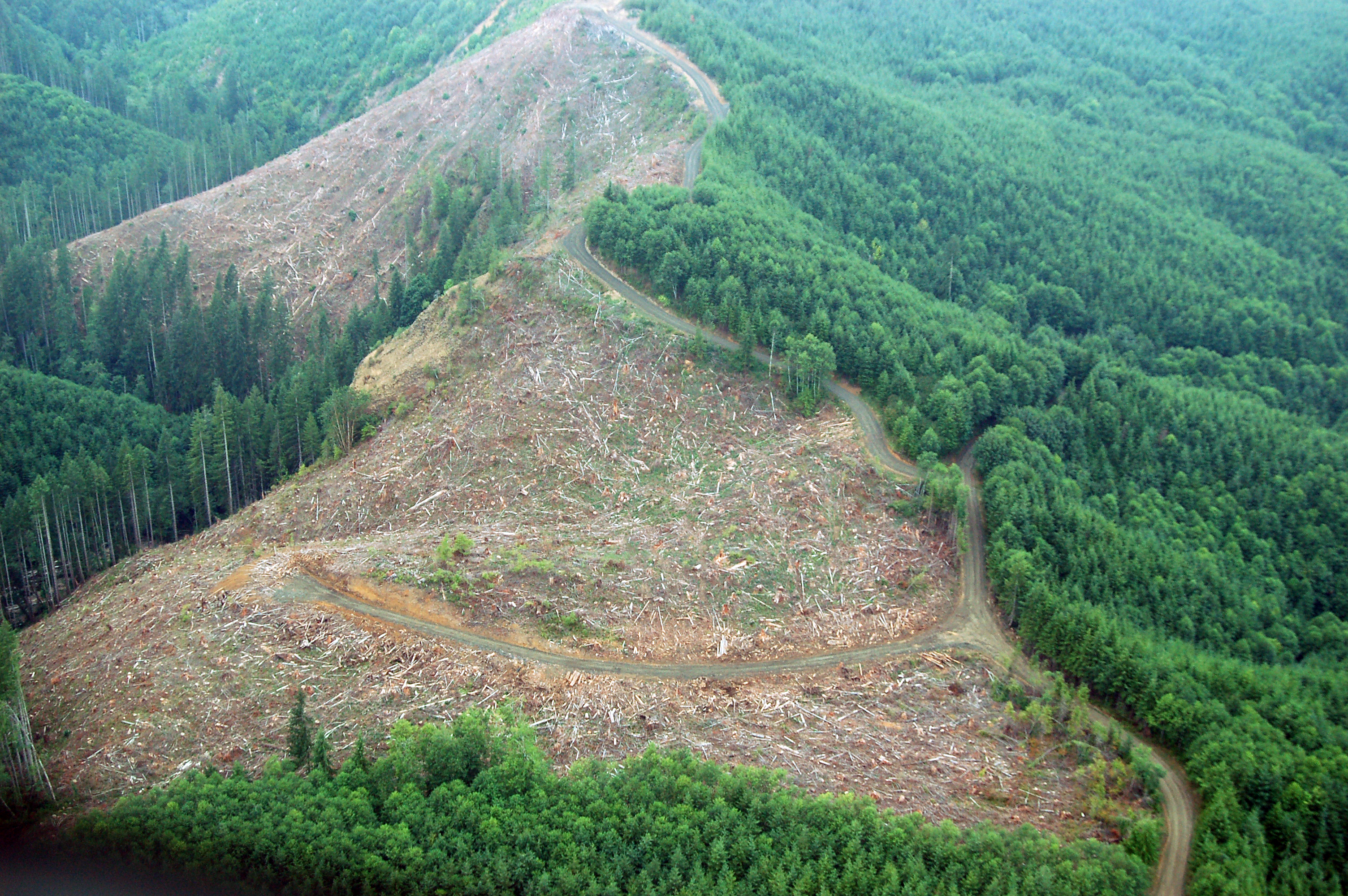
The collapse of the housing market between 2007-2009 brought a severe drop in demand, which resulted in the smallest timber harvests since the Great Depression. The market did rebound by 2013.
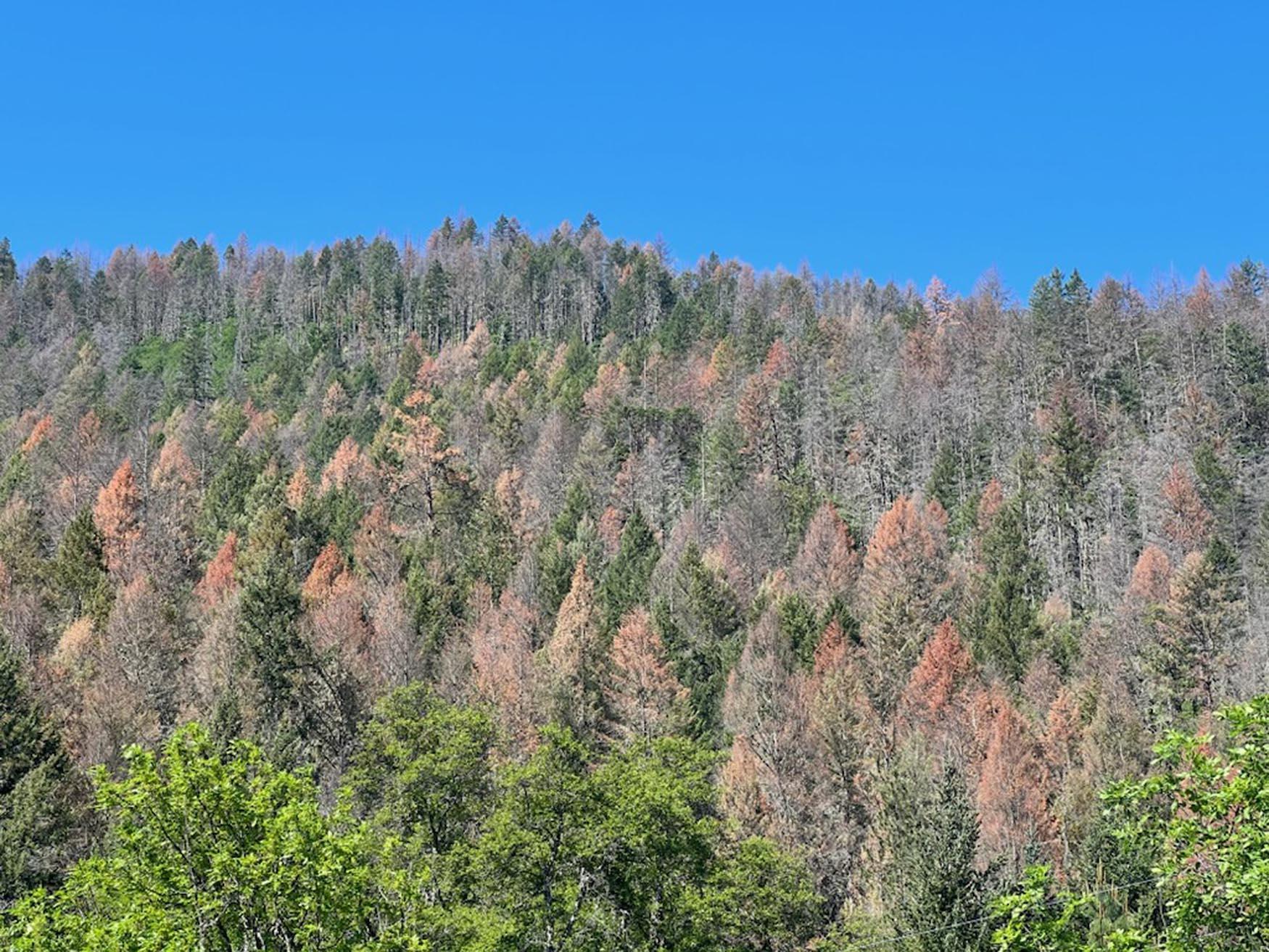
Around 2015 a massive die-off of Douglas-firs began to appear along the Applegate Valley of southwest Oregon and the Willamette Valley in west central Oregon. Over 1.1 million acres of Douglas-fir have been lost over the past ten years due to drought and extreme heat, making them vulnerable to insects like the Douglas-fir beetle (Dendroctonus pseudotsuga) and flatheaded fir borer (Phaenops drummondii).
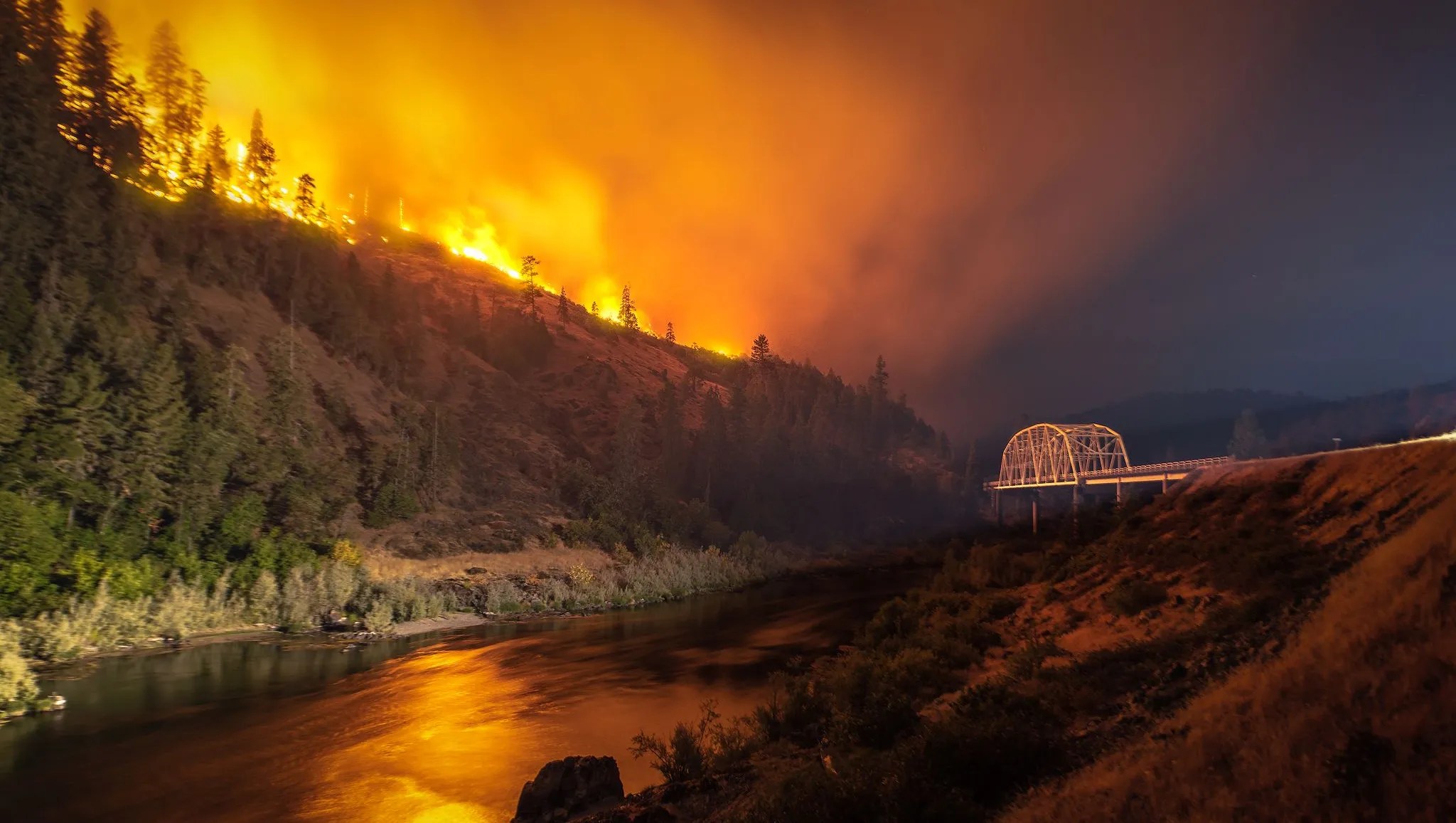
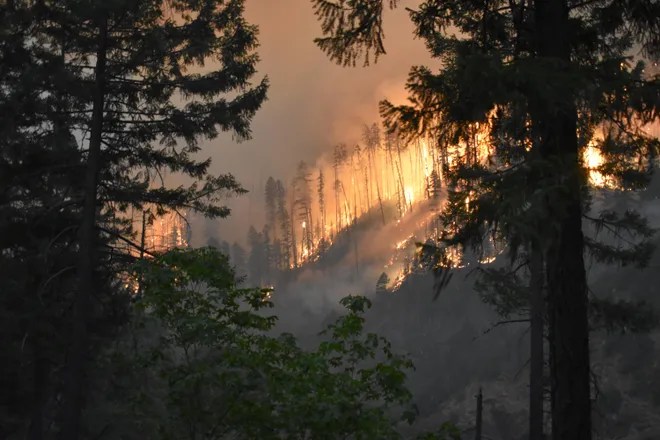
Since 2015 intense wildfires have also consumed millions of acres of valuable forestland in western Oregon due to hotter summers, lower humidity and high winds. The Labor Day fires of 2020 affected federal, state and private forestlands. A unified approach was needed, which combined local, state and federal resources, to attack these fires and control their growth. Prescribed burning has been gaining momentum throughout Oregon.
Oregon forests today…
Even though Oregon lost almost two-thirds of its old-growth forests since the 1850’s, it has retained the same amount of acres of total forestland through historic and powerful conservation laws, ongoing reforestation and sustainable forestry practices.
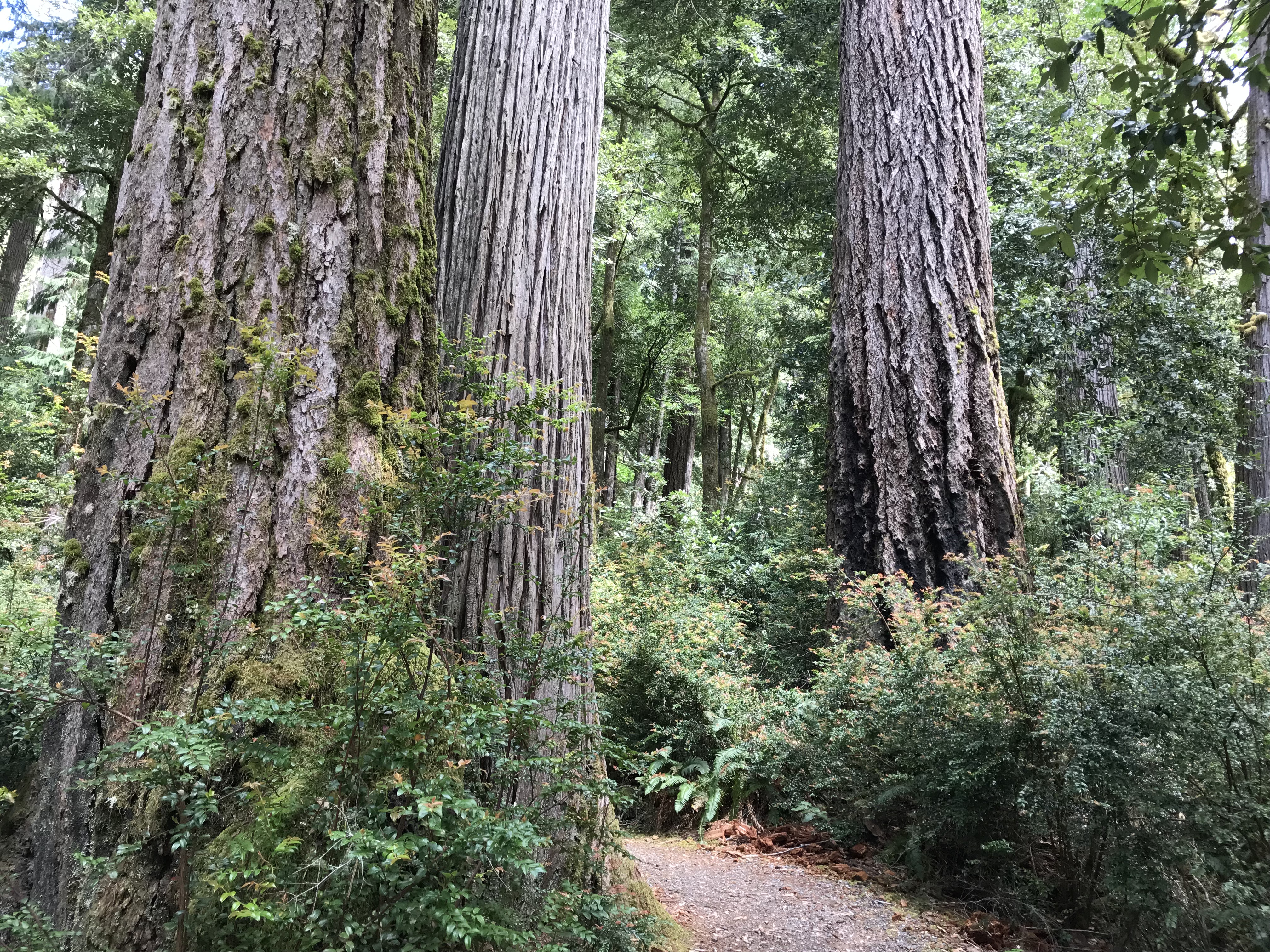
It is estimated that Oregon had 30 million total acres of forestland in the 1600’s, today there are 29.5 million acres, which include old-growth, naturalized second-growth and plantation second-growth forests.
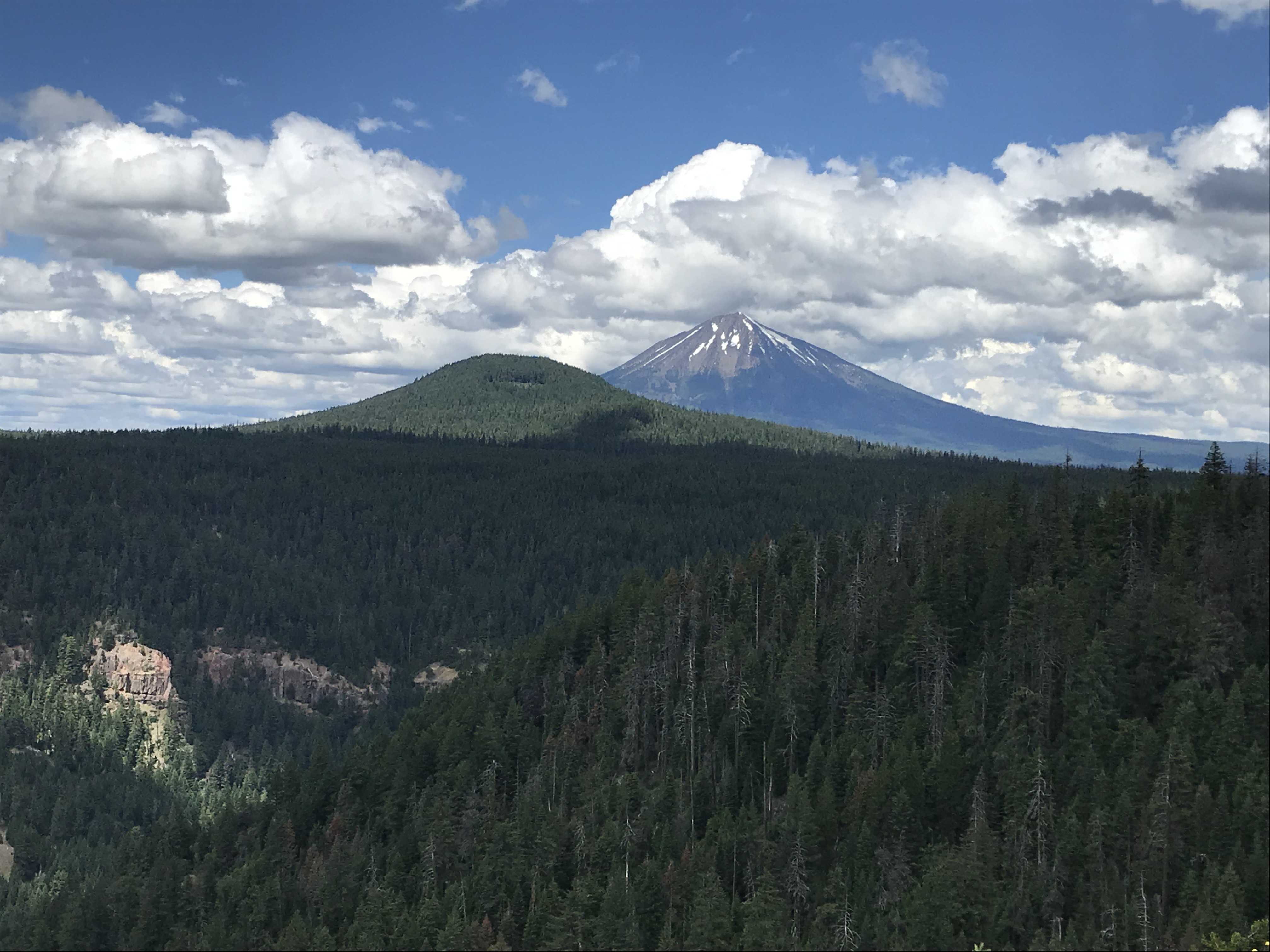
In 2021 the Private Forest Accord led to the modification of the Oregon Forest Practices Act (OFPA) to expand habitat protection for fish and other forest-dependent aquatic species, while allowing logging to continue while minimizing damage to wildlife habitat.
This will impact 10 million acres of private forestland, which account for 75-80% of Oregon’s annual timber sales.
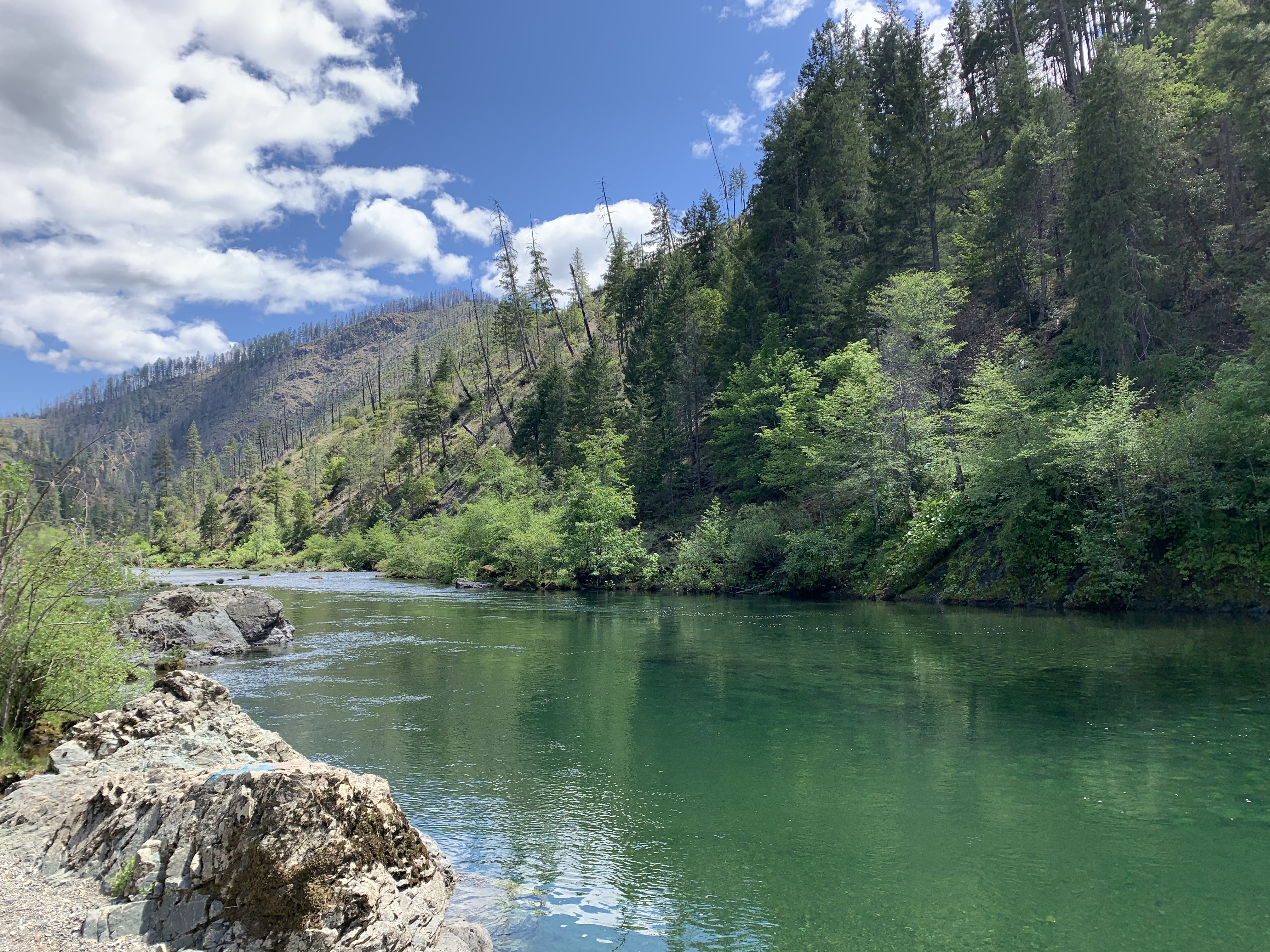
Who owns Oregon’s forests….
- Federal Forestland: 18 million acres – 60%
- U.S. Forest Service (USF): 14 million acres (national forests)
- Bureau of Land Management (BLM): 3.6 million acres
- National Park Service: 180,000 acres
- Other: 28,000 acres
- Private ownership: 10 million acres – 34%
- Large private owners: 6.5 million acres
- Small private owners: 3.5 million acres
- State Forestland: 1.3 million – 4%
- Oregon Department of Forestry (ODF): 1.1 million acres
- County & Municipal: 222,000 acres
- Native Americal Tribal Forestland: 500,000 acres – 2%
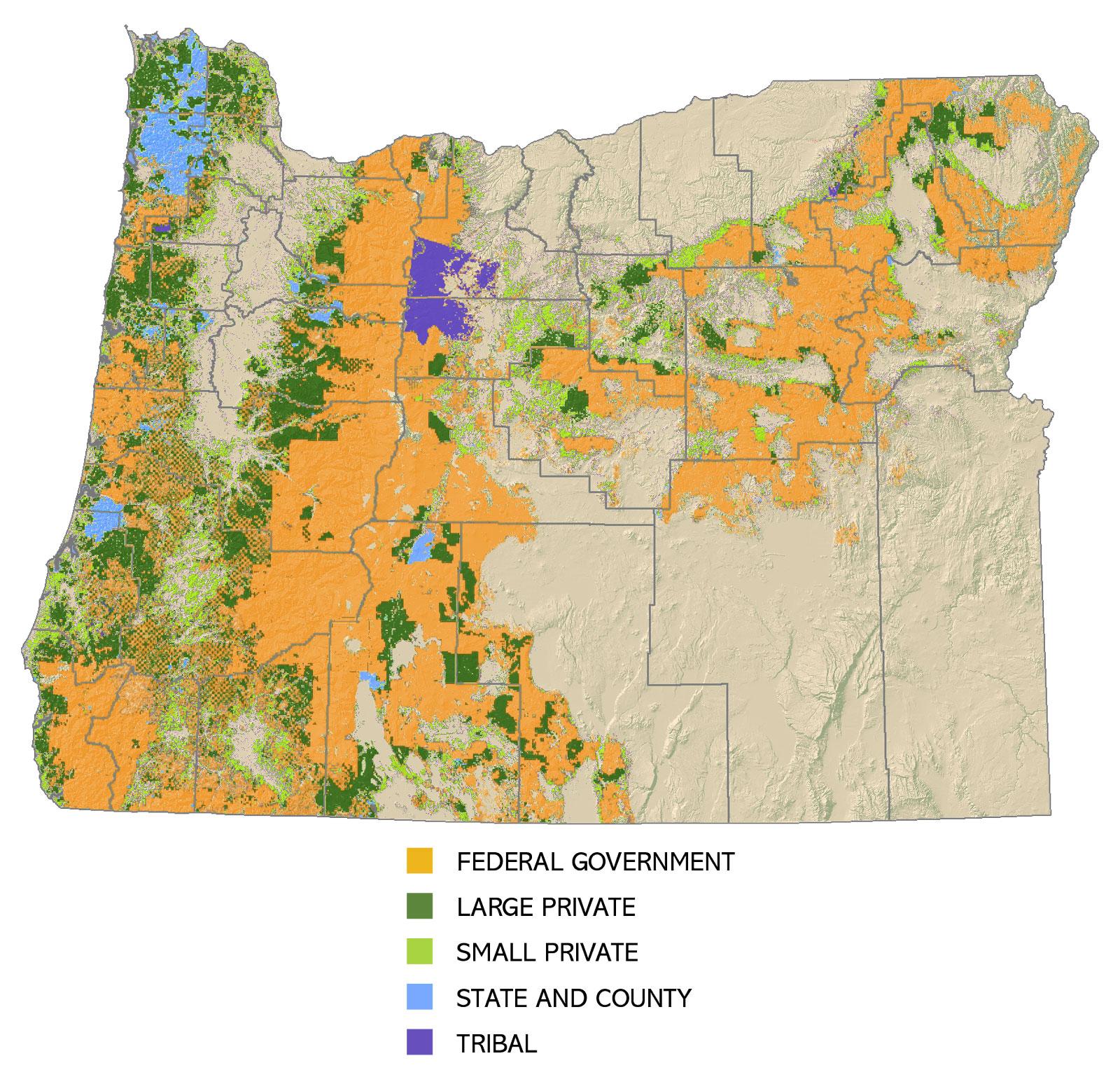
Managing private forestland in Oregon today requires strict compliance with the updated OFPA rules. Industrial clear-cutting is limited to 120 acres per clear-cut area, and the clearcut areas must be at least 300 feet apart from each other.
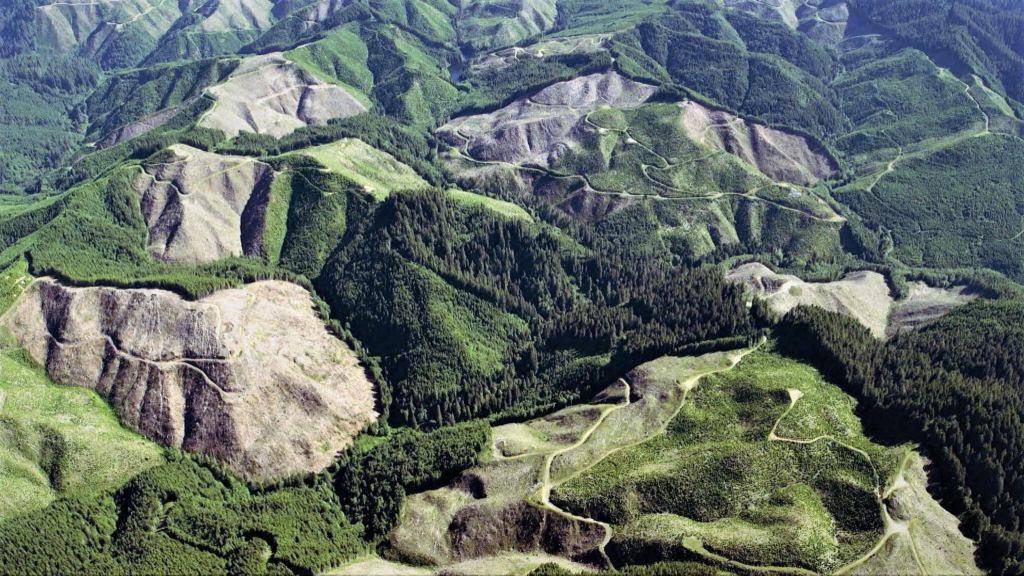
Adjacent lands can be clear-cut only when the first clear-cut has been replanted and young healthy trees are at least four feet tall. Also two live trees or two standing dead trees and two dead logs must be left on each 25 acre space to provide habitat. Clear-cutting is not allowed on steep hillsides where landslides could affect homes or roads. Clearcuts must be replanted with 400 seedlings per acre within two years and be “free-to-grow” within six years.
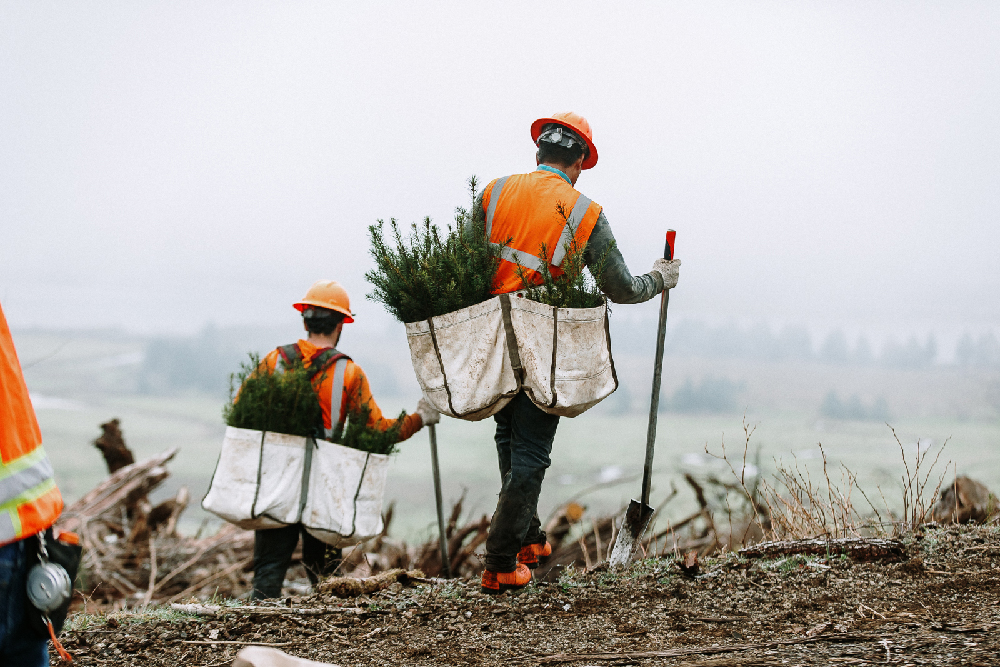
Oregon plants nearly 40 million seedlings each year, consisting primarily of Douglas-fir along with hemlock, western red-cedar and pine.
- Notice: On March 1, 2025, the Trump administration, backed by Republican lawmakers, issued an executive order for the BLM and the USFS to facilitate increased timber production on 2.5 million acres of public lands, specifically in western Oregon. He also asked that federal agencies sidestep environmental rules meant to protect 400 threatened and endangered species, including the Northern Spotted Owl and Oregon’s native Salmon.
A walk in the woods…
Oregon continues to be at the forefront of sustainable forestry practices as well as sustainable building practices that achieve short-term and long-term environmental goals.
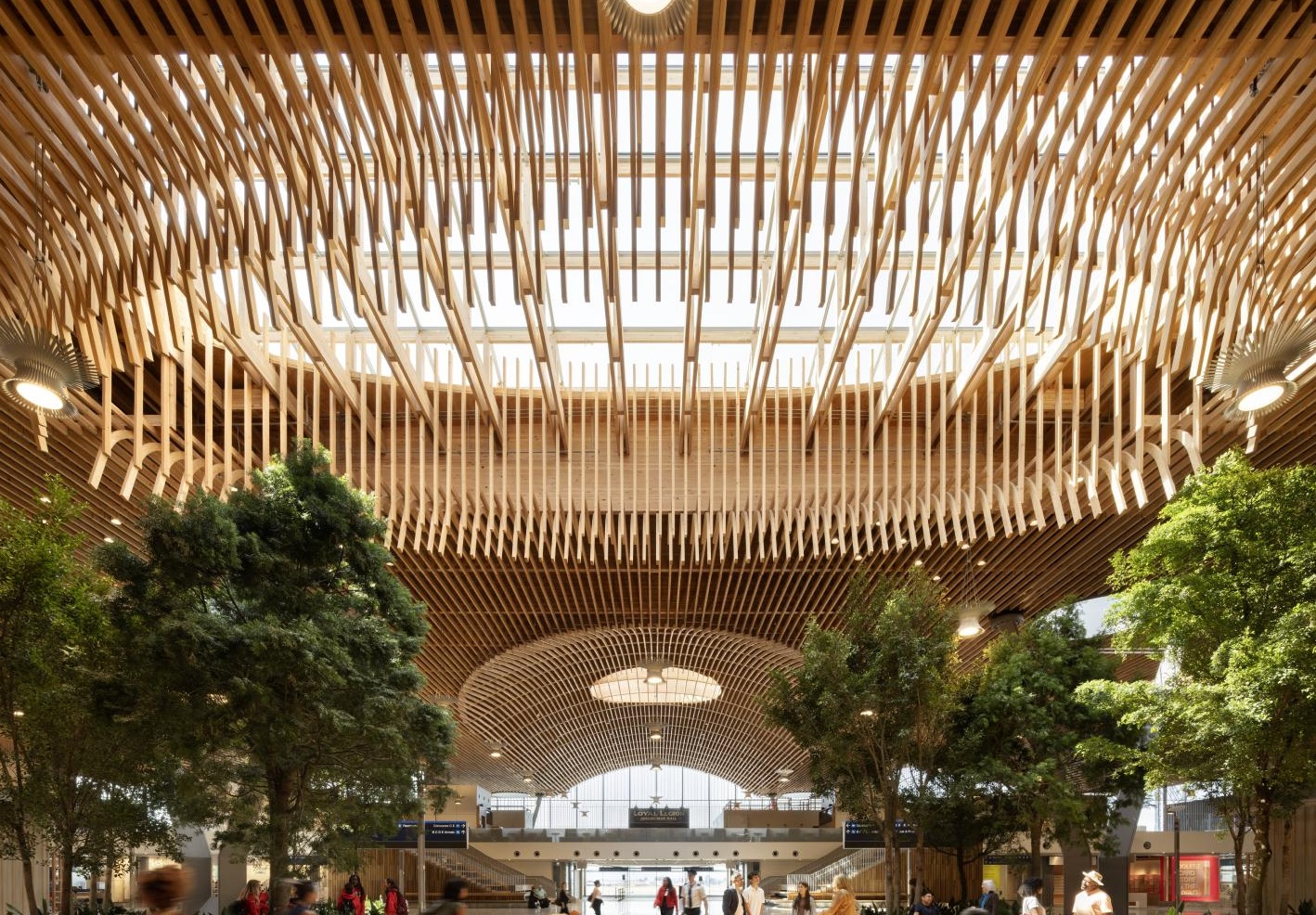
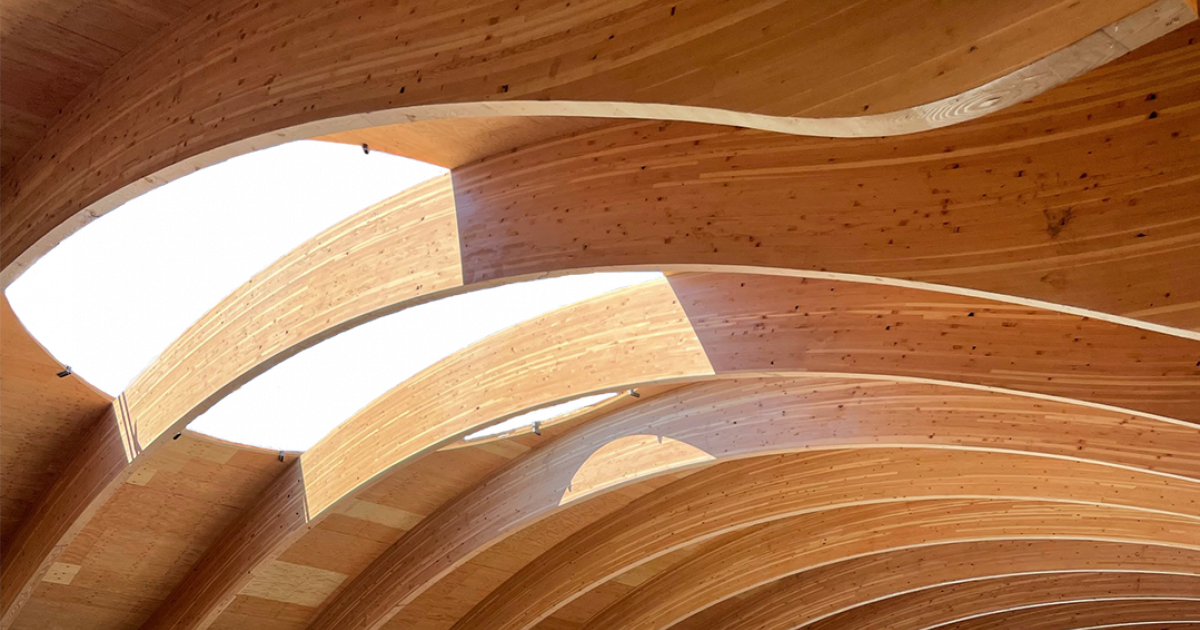
In August 2024, the Portland International Airport revealed its new terminal, featuring 3.3 million board feet of locally-sourced and sustainably-grown Douglas-fir, in honor of Oregon’s history. Covering nine acres, it contains one of the largest mass timber roofs in the nation. All of the wood was sourced within a 400 mile radius, including tribal forests from the Yakama Nation, Coquille Indian Tribe, Skohomish Indian Tribe and the Cow Creek Band of Umpqua Indians. By sourcing the wood locally and building in place they reduced the terminals carbon footprint by 70 percent.
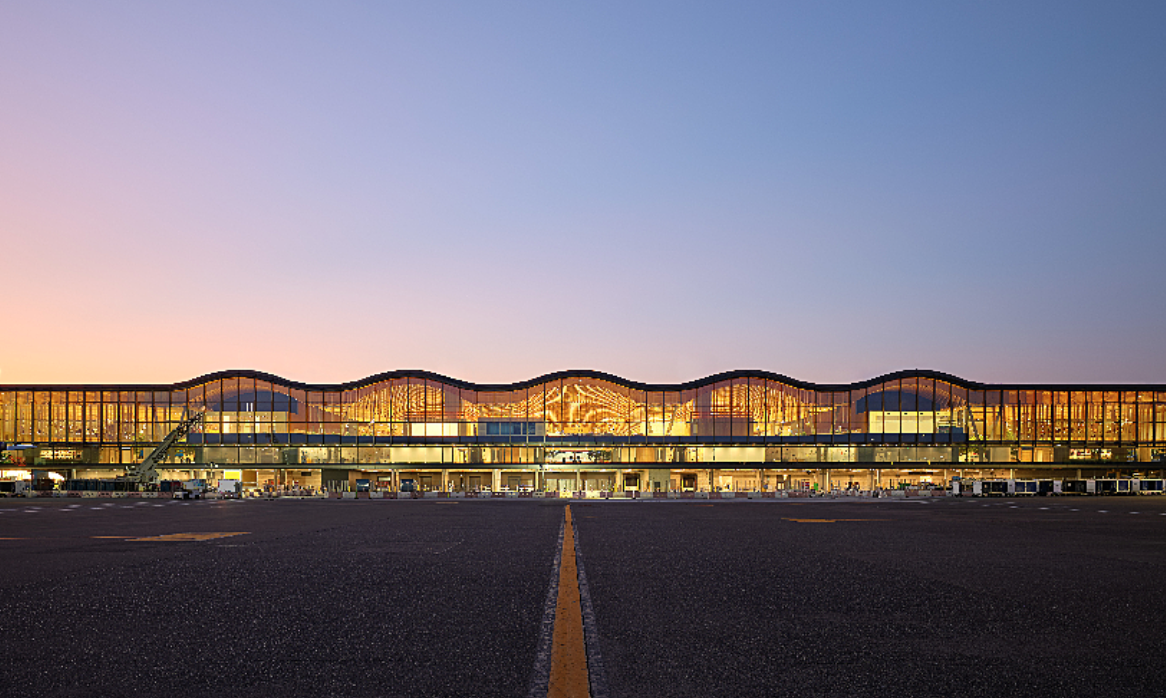
Designed to emulate a walk in the woods, ZGF Architects were inspired by the Douglas-fir canopy found in Oregon forests. They created its undulating roofline using over 400, 80-foot glulam (glue-laminated) curved beams that were fabricated by Zip-O-Laminators in Eugene, Oregon.
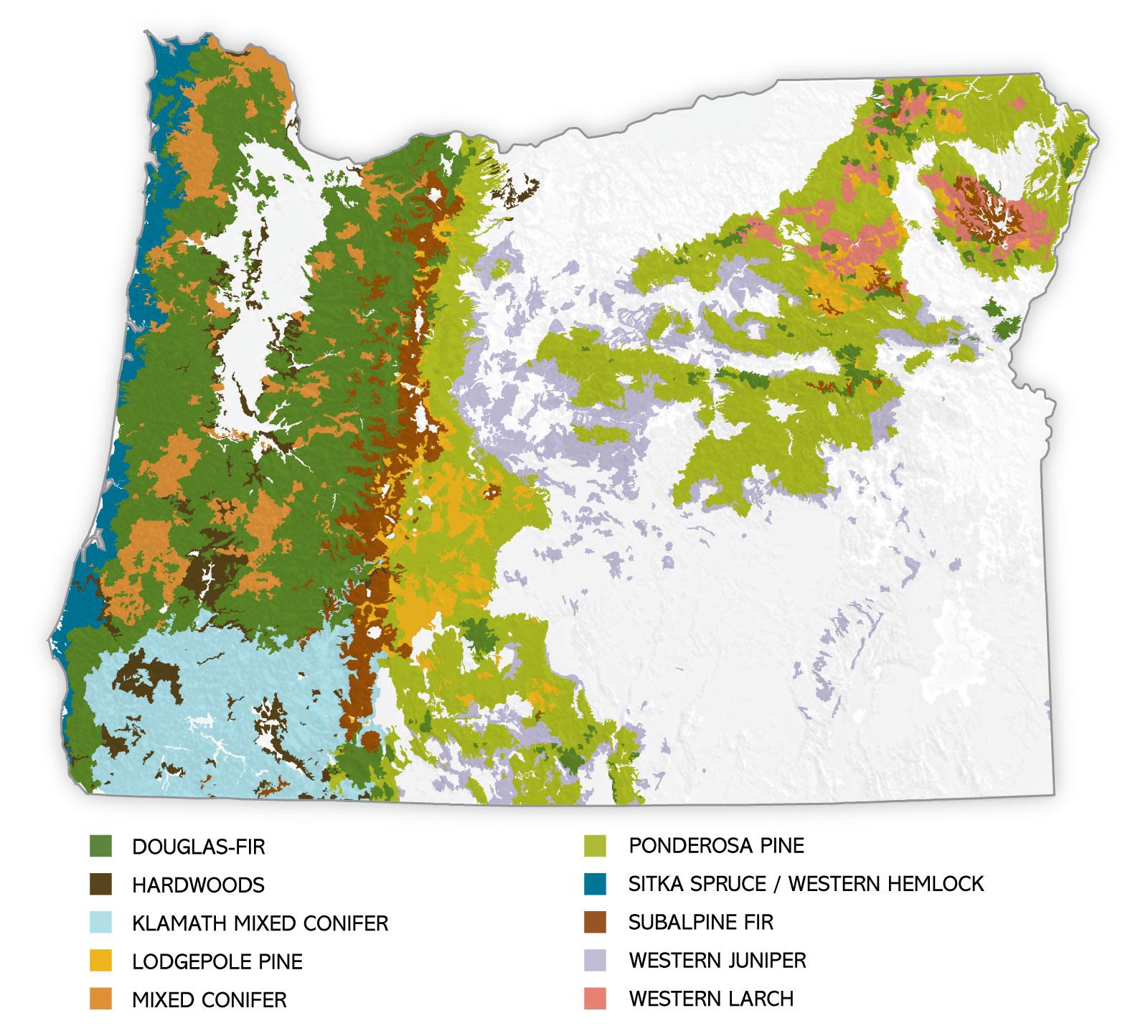
Where Douglas-firs grow in Oregon…
- Douglas-fir: old-growth, second-growth and plantation farming.
- Klamath Mixed Conifer: predominantly Douglas-fir along with sugar pine, ponderosa pine, white fir, incense-cedar plus oak and madrone.
- Mixed Conifer: dominated by Douglas-fir, western hemlock and western red-cedar.
As of today the tallest known coast Douglas-fir in the world is the Doerner-fir/Brummit-fir, located on BLM land in eastern Coos County, Oregon. It was measured to be 329 ft tall and 11.6 ft in diameter, it’s estimated to be 350-400 years old. In contrast the tallest known tree in the world today is Hyperion, a coast redwood, which is 381 ft tall, estimated to be 800 years old.
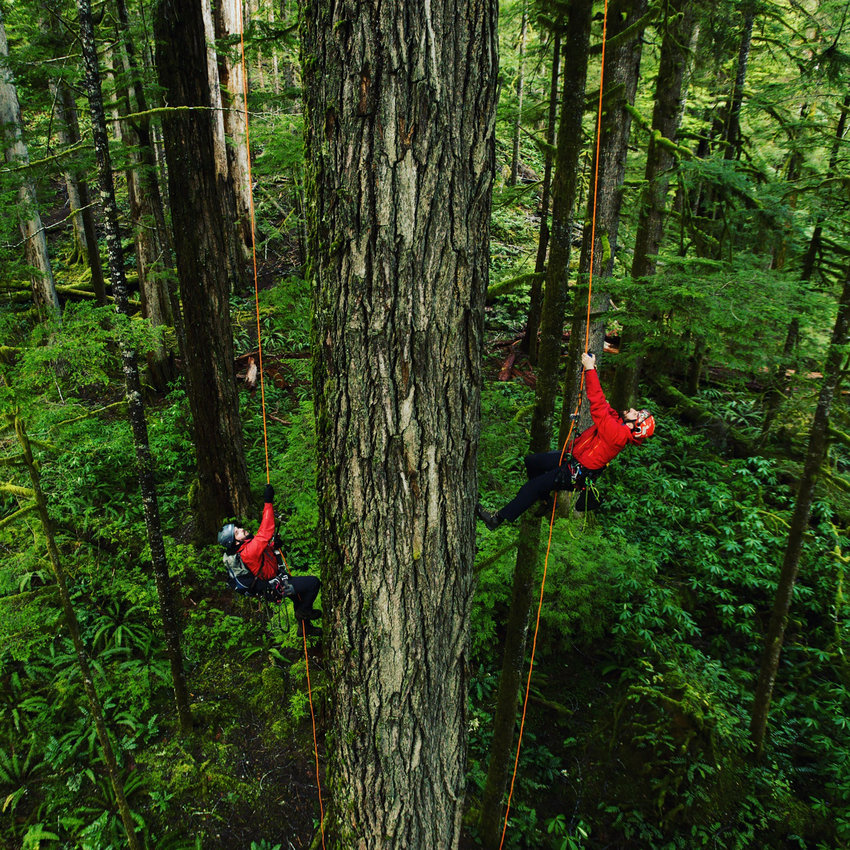
“We’re spending our time and energy creating this documentation of the forests that we have now, and these ancient trees before they fall over and die, so future generations can look back and see what the world did look like when their grandparents were around, and hopefully inspire stewardship that allows for forests to grow back up to their former glory.” – Brian French
Visit a Douglas-fir in person…
If you can, I strongly encourage you to see for yourself what a Douglas-fir looks and feels like. Always check before leaving if these parks and trails are open based on current conditions.
National Parks
- Olympic National Park – 1 million acres (northwest Washington)
- Crater Lake National Park – 183,224 acres (southern Oregon)
National Forests dominated by Douglas-fir in Oregon.
- Rogue River-Siskiyou National Forest – 1.8 million acres (southwest Oregon)
- Willamette National Forest – 1.7 million acres (west central Oregon)
- Mount Hood National Forest – 1.1 million acres (northwest Oregon)
- Siuslaw National Forest – 634,000 acres (central Oregon coast)
Best Old-Growth Douglas-fir hikes in Oregon.
- Valley of the Giants – (Polk County)
- Doerner Fir Trail – (Coos County)
- Old Salmon River Trail – (Clackamas County)
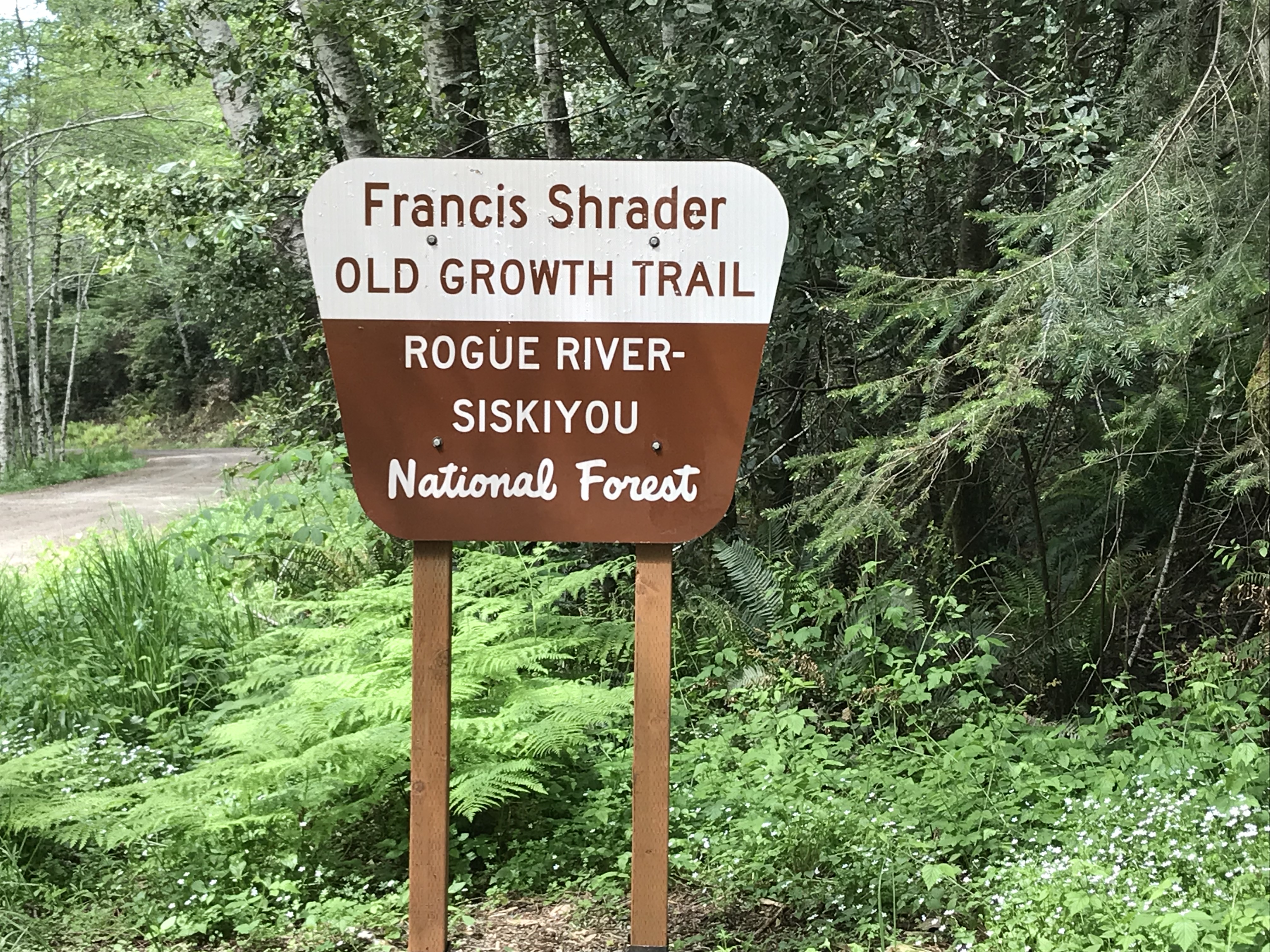
- Frances Shrader Old Growth Trailhead – (Curry County)
Best New-Growth State Forest in Oregon.
- Tillamook State Forest – (Tillamook County)
- 7 million Douglas-fir seedlings were planted over 50 years ago.
“It is not so much for its beauty that the forest makes a claim upon men’s hearts, as for that subtle something, that quality of air that emanation from old trees, that so wonderfully changes and renews a weary spirit.” – Robert Louis Stevenson
“He who plants a tree . Plants a hope.” - Lucy Larcom
“May my life be like a great hospitable tree, and may weary wanderers find in me a rest.”- John Henry Jowett
“But down deep, at the molecular heart of life, the trees and we are essentially identical.” – Carl Sagan
“Trees are sanctuaries. Whoever knows how to speak to them, whoever knows how to listen to them, can learn the truth. They do not preach learning and precepts, they preach undeterred by particulars, the ancient law of life.” – Hermann Hesse

